


Fiber Optic Cable Market Analysis Highlights Deployment Bottlenecks And Supply Chain
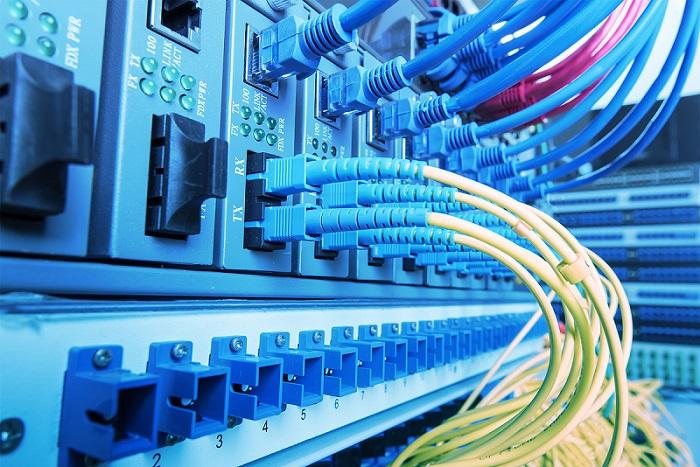
A detailed Fiber Optic Cable Market Analysis shows that demand is structurally driven by broadband upgrades, 5G transport, and data center growth. Fiber remains the most scalable medium for high-capacity, low-latency connectivity, making it central to national digital infrastructure strategies. Market analysis highlights that while demand is strong, deployment speed is often constrained by permitting, civil works, and labor availability rather than cable availability alone. Skilled splicing and testing are critical, and shortages can slow rollouts. Therefore, products and methods that reduce installation complexity—pre-connectorized drops, ribbon splicing, standardized closures—become important accelerators. Another key theme is the shift toward higher-density designs to maximize limited duct space in urban regions. Market analysis also notes increasing focus on network resilience, with operators investing in hardened routes and better documentation to reduce outage impacts and improve repair response.
Supply chain dynamics are a recurring focus in market analysis. Fiber optic cable manufacturing depends on glass preforms, drawing towers, coatings, and jacketing materials. Constraints in preform capacity or specialty inputs can affect lead times, particularly during synchronized national build cycles. As a result, operators increasingly diversify suppliers and lock in long-term contracts. Market analysis also emphasizes quality assurance because fiber networks are long-lived assets; defects can be expensive to repair after installation. Procurement teams evaluate attenuation performance, mechanical durability, and compliance with standards. Logistics and regional manufacturing also matter, especially for large public deployments where local content requirements exist. Subsea cable supply is a specialized segment with long lead times and high capital intensity, influenced by global connectivity investments. Another factor is cost volatility in construction and labor, which can outweigh cable cost changes in total project budgets. Therefore, managing deployment efficiency and coordination can be more impactful than marginal cable price differences.
Technology trends identified in market analysis include microcables, ribbon fiber, and bend-insensitive fiber for FTTH and dense metro builds. These innovations support faster installation and better use of constrained pathways. In data centers, demand grows for high-fiber-count assemblies and low-loss connectivity supporting high-speed interconnects. Market analysis also notes the increasing use of fiber in utilities and industrial networks, including smart grids and automation, which require rugged cables and high reliability. Monitoring and management are gaining importance: accurate as-built documentation, OTDR test records, and fiber management systems reduce downtime and support scalability. Distributed fiber sensing can provide infrastructure monitoring, adding value beyond communications. Environmental considerations are also emerging, with some buyers seeking sustainable packaging and improved recycling programs. While these factors may not drive core demand, they increasingly influence vendor selection in large enterprise and public-sector procurement.
The outlook from market analysis suggests sustained investment due to ongoing traffic growth and policy support for broadband inclusion. However, success for operators will depend on addressing deployment bottlenecks through improved planning, contractor capacity, and streamlined permitting. For suppliers, competitive advantage will come from consistent quality, manufacturing reliability, and support for installer productivity. Buyers should evaluate total lifecycle cost, including ease of installation, documentation quality, and repairability. They should also plan for future expansion by selecting appropriate fiber counts and scalable architectures. As 5G densification continues and data centers expand, fiber demand will remain strong even if consumer broadband reaches high penetration, because network capacity needs keep rising. Ultimately, the fiber optic cable market will continue to be shaped by the intersection of technology upgrades, infrastructure policy, and the practical realities of building and maintaining large physical networks.
Top Trending Reports:

 English
 Kiswahili
 Arabic
 French
 Spanish
 Portuguese
 Deutsch
 Turkish
 Dutch
Dutch
 Italiano
 Romaian
 Portuguese (Brazil)
 Greek
Greek
