


The Transformative Foundations of Modern Server Virtualization Technology Today
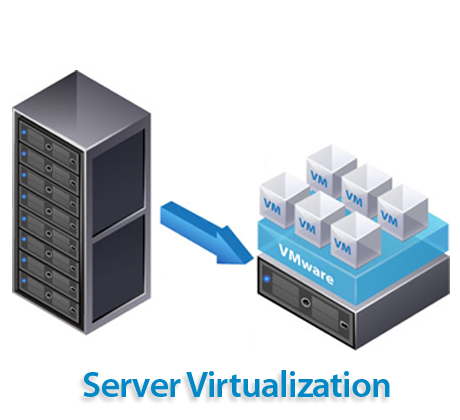
The digital era is built upon a foundation of efficiency and scalability, with Server Virtualization standing as a cornerstone of modern IT infrastructure. This technology enables a single physical server to be partitioned into multiple isolated virtual environments, or virtual machines (VMs). Each VM can run its own operating system and applications independently, fundamentally changing the one-to-one relationship between hardware and software. This abstraction layer, managed by a hypervisor, allows organizations to maximize hardware utilization, reduce physical server sprawl, and streamline administrative tasks. The significance of this technology is reflected in its market trajectory; the global Server Virtualization Market is estimated to grow to USD 14.57 billion by 2035, demonstrating its enduring importance. By consolidating server workloads, businesses can achieve significant cost savings in hardware procurement, power consumption, and data center cooling, making it an indispensable strategy for optimizing IT resources and driving operational excellence in a competitive landscape. This foundational shift has paved the way for more advanced concepts like cloud computing and software-defined data centers.
The primary driver behind the initial and ongoing adoption of server virtualization is the compelling return on investment it offers. By dramatically increasing server utilization rates from a typical 10-15% to as high as 80%, companies can drastically reduce the number of physical servers needed to support their operations. This consolidation directly translates into lower capital expenditures on hardware and reduced operational costs associated with energy, space, and maintenance. Furthermore, virtualization enhances IT agility and responsiveness. New servers can be provisioned in minutes as virtual machines, compared to the days or weeks required to procure and set up new physical hardware. This rapid deployment capability allows businesses to respond swiftly to changing demands, test new applications in isolated sandboxes without risk to production environments, and scale resources up or down as needed. The flexibility to move virtual machines between physical hosts without downtime, a feature known as live migration, also significantly improves availability and simplifies hardware maintenance.
At the core of server virtualization technology is the hypervisor, a crucial piece of software or firmware that creates and runs virtual machines. There are two main types of hypervisors. Type 1, or "bare-metal," hypervisors run directly on the host's hardware to control the hardware and manage guest operating systems. Examples include VMware ESXi, Microsoft Hyper-V, and the open-source KVM. This type is favored in enterprise data centers for its superior performance, scalability, and stability. In contrast, Type 2, or "hosted," hypervisors run on a conventional operating system just like other software applications. Examples include VMware Workstation and Oracle VirtualBox. While easier to set up, they introduce more performance overhead and are typically used for desktop-level virtualization, development, and testing rather than for production server workloads. The choice of hypervisor is a critical decision that influences the entire virtual infrastructure's capabilities, management complexity, and overall cost.
The impact of server virtualization extends far beyond simple server consolidation. It is the fundamental enabler of private and public cloud computing, providing the resource pooling and abstraction necessary for on-demand service delivery models like Infrastructure as a Service (IaaS). It also plays a vital role in modern disaster recovery and business continuity strategies. By encapsulating entire servers—including their OS, applications, and data—into portable VM files, organizations can easily replicate and restore their systems at a secondary site, drastically reducing recovery times. As IT environments continue to evolve with the rise of containerization and edge computing, virtualization continues to adapt, often serving as the underlying platform for managing container hosts and providing secure, multi-tenant environments at the network edge, proving its continued relevance in the ever-changing tech landscape.
Explore More Like This in Our Regional Reports:

 English
 Arabic
 French
 Spanish
 Portuguese
 Deutsch
 Turkish
 Dutch
Dutch
 Italiano
 Russian
 Romaian
 Portuguese (Brazil)
 Greek
Greek
