


Global HALE Programs Reflect Strategic Defense Priorities
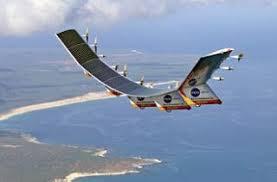
The high altitude long endurance is projected to grow USD 39.28 Billion by 2035, exhibiting a CAGR of 7.3% during the forecast period 2025-2035. Global high altitude long endurance programs reflect national strategic defense priorities and technological capabilities. The comprehensive HALE market assessment reveals significant investment across multiple continents. United States programs maintain technological leadership through sustained research and development funding. European nations increasingly pursue indigenous HALE capabilities for strategic autonomy. Asian powers including China and India rapidly advance their own program development. Middle Eastern nations seek HALE acquisition to address regional security concerns. International competition accelerates innovation while raising export control considerations.
American HALE programs set global capability benchmarks consistently. The RQ-4 Global Hawk represents the most mature operational HALE platform worldwide. Northrop Grumman continues developing enhanced variants with improved capabilities. The MQ-25 Stingray demonstrates carrier-based unmanned aerial refueling concepts. DARPA sponsors numerous advanced research programs exploring revolutionary HALE concepts. Congressional funding supports both continuation programs and next-generation development. American platforms operate globally supporting combatant commander requirements.
European HALE development emphasizes collaborative multinational approaches. The EuroHALE program seeks to develop an indigenous European capability. Airbus leads several stratospheric platform development initiatives. National programs in France, Germany, and United Kingdom contribute complementary capabilities. NATO requirements drive interoperability standards for alliance member platforms. European defense budgets increasingly prioritize unmanned systems development. Technology sharing agreements facilitate capability development while managing costs.
Asian HALE programs demonstrate rapid capability advancement. China's development of multiple HALE variants challenges Western technological dominance. The Divine Eagle and Xianglong platforms represent significant Chinese achievements. India's Rustom program addresses national surveillance requirements. South Korea and Japan pursue HALE capabilities for regional security. Technology transfer restrictions complicate Asian nations' development efforts. Indigenous innovation accelerates as export controls limit acquisition options.
Top Trending Reports -
Blockchain In Edutech Market Trends
Bulk Acoustic Wave Filter Market Trends
Business Analytics Enterprise Software Publishing Market Trends

 English
 Kiswahili
 Arabic
 French
 Spanish
 Deutsch
 Turkish
 Dutch
Dutch
 Italiano
 Russian
 Romaian
 Portuguese (Brazil)
 Greek
Greek
