


Key Players Shaping Data Center Development
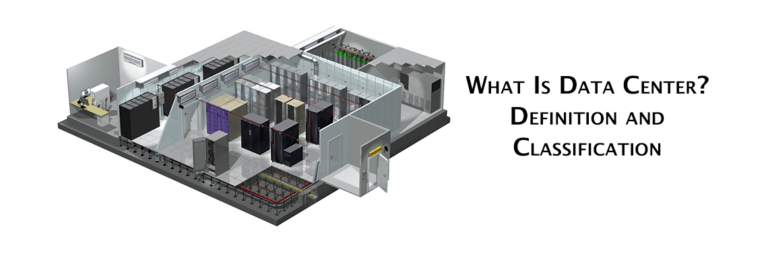
The single most powerful technological force reshaping the Data Center Market Share in the United States is the rise of artificial intelligence. The computational demands of training and running the large-scale AI models that power the generative AI revolution are fundamentally different and an order of magnitude greater than those of traditional enterprise computing. This has created a massive and urgent need for a new generation of data centers that are specifically designed and engineered to support these high-density AI workloads. A traditional data center is typically designed to support server racks that consume between 5 to 15 kilowatts (kW) of power. An AI rack, packed with multiple, power-hungry GPUs, can easily consume 50 kW, 100 kW, or even more. This is not an incremental change; it is a step-change in power and thermal density that is forcing a complete rethink of data center design, from the electrical distribution architecture to the cooling systems. The race to build these "AI data centers" is the new frontier of the industry and the primary driver of new construction and investment across all the major US data center markets.
Key Players
The key players in the US AI data center ecosystem are a highly specialized and collaborative group. The primary demand comes from the key players who are developing and deploying AI at scale. This includes the major hyperscale cloud providers (AWS, Microsoft, Google) who are building out massive fleets of GPUs to offer AI training and inference as a service, and the major AI companies themselves, like OpenAI and Meta, who are also building their own massive supercomputing clusters. The second group of key players are the data center developers and operators who are building the specialized facilities to house this hardware. This involves working closely with the third group of key players: the power and cooling technology vendors. Companies like Vertiv and Schneider Electric are key players in designing the new high-density power distribution systems and, most critically, the advanced liquid cooling solutions that are required to dissipate the immense heat generated by these AI racks. The fourth key player is NVIDIA, whose GPUs are the heart of these AI systems and whose own reference designs for AI supercomputers (like the SuperPOD) are heavily influencing the overall data center architecture.
Future in "Data Center Market Share"
The future of the AI data center in the United States will be a story of even greater power densities and the widespread adoption of liquid cooling as the default standard. The future will see the industry move beyond retrofitting existing designs and will see the construction of facilities that are purpose-built for AI from the ground up. These data centers will have a different physical layout, with power and cooling infrastructure designed specifically to support rows of ultra-high-density liquid-cooled racks. A second major future trend will be a much tighter integration between the data center facility and the IT hardware. The design of the servers and the design of the data center will become much more co-dependent, a trend that is already well-advanced within the major hyperscalers' self-build projects but will become more common in the colocation market. The future will also see a greater focus on building AI data centers in locations with access to massive amounts of low-cost, renewable power, as the energy consumption of these facilities is a major operational cost and an environmental concern. This is a level of specialization and scale not yet seen in the emerging AI markets of Europe or APAC.
Key Points "Data Center Market Share"
This analysis highlights several crucial points about the impact of AI on the US data center market. The primary driver is the extreme power and cooling requirements of high-density AI workloads, which is forcing a fundamental change in data center design. The key players are a collaborative ecosystem of the hyperscalers and AI companies driving the demand, the data center developers building the facilities, and the technology vendors providing the critical power, cooling, and GPU hardware. The future lies in the development of purpose-built AI data centers and the universal adoption of liquid cooling as the standard thermal management solution. The AI revolution is not just a software story; it is a story that is being written in the concrete, steel, and advanced engineering of America's next generation of digital infrastructure. The Data Center Market Share is projected to grow to USD 150.11 Billion by 2035, exhibiting a CAGR of 7.82% during the forecast period 2025-2035.
Top Trending Reports -

 English
 Kiswahili
 Arabic
 Spanish
 Portuguese
 Deutsch
 Turkish
 Dutch
Dutch
 Italiano
 Russian
 Romaian
 Portuguese (Brazil)
 Greek
Greek
