


Fuel Cells Powering the Future of Marine Vessels: Market to Hit USD 5.7 Billion by 2032
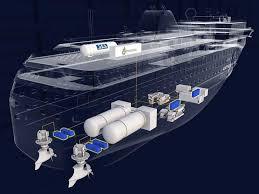
Fuel Cells for Marine Vessels Market Outlook
As the global maritime sector pivots toward sustainability, the adoption of fuel cells in marine vessels is gaining remarkable traction. According to recent research by Market Research Future, the Fuel Cells for Marine Vessels Market is projected to grow from USD 2,730.7 million in 2024 to USD 5,736.8 million by 2032, reflecting an impressive compound annual growth rate (CAGR) of 9.72% during the forecast period (2024–2032).
This Fuel Cells for Marine Vessels Market surge is driven by increasing regulatory pressure to reduce greenhouse gas emissions, advancements in fuel cell technology, and the maritime industry’s growing commitment to decarbonization. As ship operators seek alternatives to traditional fossil fuels, fuel cells are emerging as a compelling solution for both auxiliary and primary power in marine applications.
The Green Shift in Marine Propulsion
The maritime industry is under mounting pressure to decarbonize. The International Maritime Organization (IMO) has set ambitious targets to reduce total annual greenhouse gas emissions from international shipping by at least 50% by 2050 compared to 2008 levels. In this context, fuel cells offer a zero-emission, high-efficiency alternative to diesel engines traditionally used in ships.
Fuel cells operate by converting hydrogen or other fuels directly into electricity through an electrochemical reaction, producing only water and heat as byproducts. This makes them particularly attractive for cruise ships, ferries, cargo vessels, and naval ships, especially those operating in Emission Control Areas (ECAs) where stringent environmental regulations apply.
Technology Advancements Driving Adoption
Innovations in fuel cell technology are expanding their viability and versatility in marine environments. Among the various types of fuel cells, Proton Exchange Membrane Fuel Cells (PEMFCs) and Solid Oxide Fuel Cells (SOFCs) are at the forefront, offering scalable solutions with minimal noise, vibration, and emissions.
Key developments include:
- Compact, modular designs that simplify integration into existing vessel architectures.
- Hybrid systems combining fuel cells with batteries or diesel generators for enhanced performance.
- Advanced hydrogen storage solutions, improving onboard safety and capacity.
Major industry players such as Ballard Power Systems, Siemens Energy, Toshiba, and PowerCell Sweden AB are actively investing in R&D to enhance fuel cell performance, durability, and cost-efficiency, accelerating their commercialization in the marine space.
Market Dynamics and Regional Insights
The fuel cells for marine vessels market is gaining momentum globally, with Europe and Asia-Pacific leading the charge. Europe, in particular, is a front-runner, thanks to its strict maritime regulations and government-funded green shipping initiatives. Countries like Norway, Germany, and the Netherlands are investing heavily in zero-emission ferries and hydrogen infrastructure.
Meanwhile, Asia-Pacific, led by China, South Korea, and Japan, is witnessing rapid adoption of fuel cells for commercial and military vessels, supported by aggressive sustainability targets and shipbuilding capabilities.
North America is also showing increasing interest, especially in coastal and inland waterway applications, where cleaner technologies are becoming operational imperatives.
Key Challenges and Future Outlook
Despite promising growth, several challenges remain. High initial costs, limited hydrogen infrastructure, and fuel availability are among the key barriers to widespread adoption. Moreover, the development of globally harmonized standards for marine hydrogen fuel systems is still in progress.
However, these challenges are being actively addressed through public-private partnerships, pilot projects, and policy incentives. Government-backed initiatives and funding programs across the EU, U.S., and Asia are accelerating innovation and helping maritime stakeholders overcome these adoption hurdles.
Looking forward, the role of fuel cells in marine applications is expected to expand beyond pilot programs to full-scale commercial deployment. As hydrogen production and distribution networks mature, fuel cells are likely to become a cornerstone of sustainable marine propulsion.
Get a Quote - Request a price quote for the report or specific research services.
Conclusion
The Fuel Cells for Marine Vessels Market is on a fast track to growth, expected to double in size by 2032. With a projected value of USD 5.73 billion and a strong 9.72% CAGR, the sector is a vital component of the maritime industry's clean energy transformation. As fuel cell technology matures and global climate goals intensify, this market is poised to power a new era of greener, cleaner seafaring.

 English
 Kiswahili
 Arabic
 French
 Spanish
 Portuguese
 Deutsch
 Turkish
 Dutch
Dutch
 Italiano
 Romaian
 Portuguese (Brazil)
 Greek
Greek
