


Components and Innovation in Nail Polish
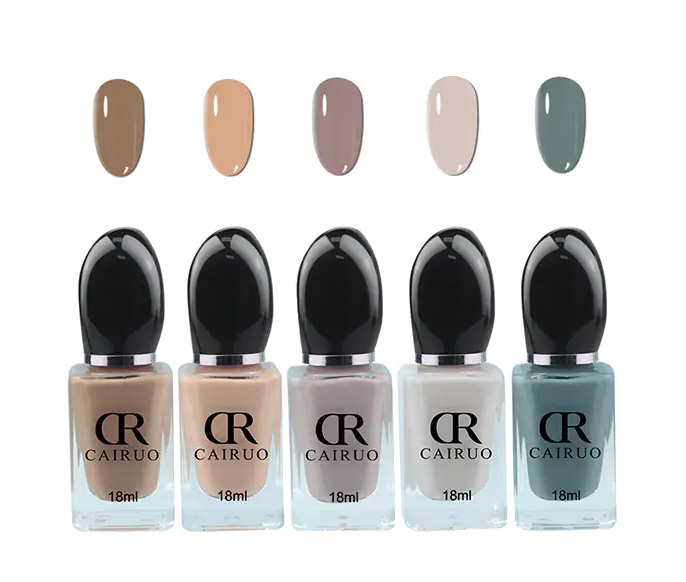
The materials and technology used in nail polish formulation have evolved significantly over the years. Nail polish, once a simple product, now incorporates advanced materials and innovative techniques to improve performance, durability, and safety.
One of the key materials in nail polish is the resin. Nitrocellulose is the most commonly used resin, creating a flexible, glossy film once it dries. The resin is combined with solvents such as ethyl acetate and butyl acetate, which dissolve the resin to make it easy to apply. Solvents are essential for ensuring the polish is smooth and even, allowing it to flow onto the nail without streaks or bubbles.
Pigments are another crucial component, providing the color and opacity of the polish. Pigments can range from organic dyes for lighter shades to mineral-based pigments for rich, bold colors. Some modern nail polishes include special effects, such as glitter, shimmer, or holographic finishes, which are achieved by adding small particles of metallic or iridescent materials to the formula.
The role of plasticizers is to enhance the flexibility and smoothness of the dried polish. Without these agents, nail polish would be prone to chipping and cracking. Common plasticizers in nail polish include camphor and dibutyl phthalate, although safer alternatives are increasingly being used in "3-free" and "5-free" formulas, which exclude harmful chemicals. These safer alternatives have become more popular as consumers demand non-toxic, environmentally friendly products.
Technology has also played a crucial role in nail polish development. The introduction of quick-drying formulations has been one of the most significant technological advancements. Modern nail polishes are designed to dry faster, often in as little as 60 seconds, without compromising the appearance or texture of the finish. This has been achieved through the use of fast-drying solvents and accelerators that speed up the evaporation process.
Another key technology is the use of UV absorbers in nail polish. These stabilizers prevent the color from fading when exposed to sunlight or artificial light, ensuring the polish remains vibrant for a longer period. UV-resistant formulas also reduce the risk of discoloration and fading in high-traffic environments, where nails are exposed to harsh conditions.
Many brands now offer "gel-like" nail polishes that mimic the long-lasting effects of professional gel manicures. These products typically incorporate thicker formulations, along with high-shine finishes, that provide a more durable and resilient coating without the need for UV lamps.
In conclusion, the materials and technology used in nail polish have advanced significantly over the years. From the resin and pigments to the quick-drying agents and UV stabilizers, each component plays a vital role in the final product’s performance.

 English
 Kiswahili
 Arabic
 French
 Spanish
 Deutsch
 Turkish
 Dutch
Dutch
 Italiano
 Russian
 Romaian
 Portuguese (Brazil)
 Greek
Greek
