


Wind Turbine Composites Market: Industry Overview, Top Key Players Analysis And Growth Factors
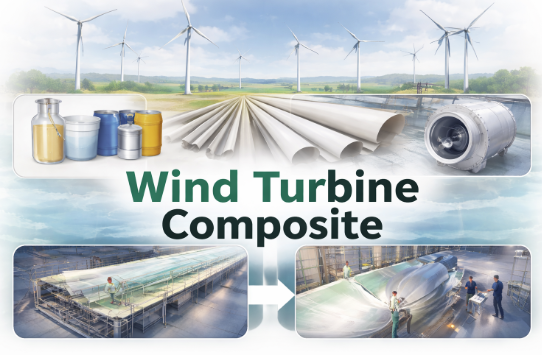
According to MarketsandMarkets, 'Wind Turbine Composites Market by Fiber Type (Glass, Carbon), Resin Type (Epoxy, Polyurethane), Manufacturing Process, Component (Blades, Nacelles), Application (Onshore, Offshore) and Region - Global Forecast to 2030', the wind turbine composites market is projected to reach USD 28.85 billion by 2030 from USD 17.67 billion in 2025, at a CAGR of 10.3%.
Download PDF Brochure: https://www.marketsandmarkets.com/pdfdownloadNew.asp?id=155405379
Wind Turbine Composites Market Size & Forecast:
- Market Size Available for Years: 2021-2030
- 2025 Market Size: USD 17.67 billion
- 2030 Projected Market Size: USD 28.85 billion
- CAGR (2025-2030): 10.3%
Wind Turbine Composites Market Trends & Insights:
- The global transition to renewable energy sources and the worldwide commitment to achieving carbon neutrality are the main factors that drive the growth of the wind turbine composites market. Modern wind turbines use advanced composite materials, which include glass fiber and high-performance carbon fiber to construct rotor blades, nacelles, and towers, which need exceptional strength-to-weight ratios and protection against corrosion. The demand for lightweight materials stems from the need to construct offshore wind farms, which will use new 15 MW turbines equipped with blades that exceed 100 meters in length to achieve optimal energy collection while maintaining their structural integrity. The market experiences substantial expansion in both Asia Pacific and North America as government subsidies and resin systems and automated manufacturing process innovations create technological advancements which help recyclability and decrease electricity production costs.
- Asia Pacific dominated the wind turbine composites market with a share of 78.2% in terms of value in 2024.
- By fiber type, the carbon fiber segment is projected to grow at the highest CAGR of 11.4% during the forecast period.
- By resin type, the epoxy resin segment dominated the wind turbine composites market with a share of 70.7% in terms of value in 2024.
- By manufacturing process, the VARTM segment accounted for the largest share in the wind turbine composites market.
- By component, the blades segment is projected to register the highest CAGR of 10.6% in the wind turbine composites market.
- By application, the onshore segment held the largest share of the wind turbine composites market.
- Toray Industries, Inc., ExxonMobil Corporation, Evonik, China Jushi Co., Ltd., and China National Building Material Group Corporation are star players in the wind turbine composites market, given their broad industry coverage and strong operational & financial strength.
- HS Hysoung Advanced Material, Jiuding New Material Co., Ltd., and Reliance Industries Ltd. have distinguished themselves among startups and SMEs due to their well-developed marketing channels and extensive funding to build their product portfolios.
Browse in-depth TOC on 'Wind Turbine Composites Market'
180 - Tables
100 - Figures
280 - Pages
Request Sample Pages: https://www.marketsandmarkets.com/requestsampleNew.asp?id=155405379
The rising global commitment to renewable energy sources and the fast establishment of onshore and offshore wind farms create a strong need for advanced composite materials, which turbine blades and nacelles require. The materials that engineer use for their design work, such as glass and carbon fiber reinforced polymers, deliver outstanding strength-to-weight ratios, which enable them to create blades that reach lengths above 100 meters. Manufacturers in Asia Pacific and Europe are shifting to recyclable bio-based composites to meet sustainability standards because urbanization creates energy needs, and net-zero emissions goals are becoming essential. The evolution process reduces lifecycle expenses while it builds supply chain strength to handle increased investments for larger and more powerful turbine systems.
The glass fiber segment accounted for the largest share in the global wind turbine composites market in 2024.
The glass fiber segment dominated the global wind turbine composites market because it provides an effective combination of strength, stiffness, and fatigue resistance at a much lower price than carbon fiber. The established manufacturing processes of hand lay-up and resin infusion enable more cost-effective and dependable production of large-scale blades. The material demonstrates strong resistance against corrosion while maintaining its durability through extreme environmental conditions, which enables extended service life. The material maintains its industry-leading position because of its widespread availability and established supply chain system.
The epoxy segment accounted for the largest share in the global wind turbine composites market in 2024.
The epoxy resin segment held the largest share in the global wind turbine composites market because it provides better mechanical performance through its high strength-to-weight ratio and its ability to withstand continuous stress, which is essential for large wind turbine blades. The material provides strong bonding with glass and carbon reinforcing fibers, which helps maintain structural strength throughout its entire lifetime. The epoxy material exhibits less shrinkage, superior resistance against moisture and temperature changes when compared to polyester resin alternatives. The material's ability to work with advanced manufacturing techniques, such as vacuum infusion, makes it ideal for creating large turbine blades that require high performance.
The VARTM/VI segment is set to grow at the highest CAGR in the wind turbine composites market during the forecast period.
The VARTM/VI manufacturing process is expected to register the highest CAGR in the wind turbine composites market, because the method provides cost-effective solutions that enable large-scale production of turbine blades. The process enables manufacturers to achieve cost savings through autoclave-free operations, which produce strong yet light materials. VARTM enables the manufacturing of extended blades, which modern wind turbine technology requires to enhance energy production capabilities. Manufacturers choose the system because it supports automated operations while decreasing material waste.
Request Customization: https://www.marketsandmarkets.com/requestCustomizationNew.asp?id=155405379
Asia Pacific segment accounted for the largest share in the global wind turbine composites market in 2024.
Asia Pacific is the largest market for wind turbine composites, because countries like China and India expand their wind energy capacity through their strong policy framework and renewable energy goals. The region benefits from a well-established manufacturing ecosystem, which includes low-cost labor and readily available raw materials, to achieve cost-effective production. The demand for composite materials used in blades and nacelles increases because companies invest in both onshore and offshore wind projects. The industrial growth and high energy demand create stronger market conditions for wind power, which leads to increased adoption of this technology.
Wind Turbine Composites Companies
Prominent companies include China Jushi Co., Ltd. (China), DowAksa (Turkey), Teijin Limited (Japan), SGL Carbon (Germany), Hexcel Corporation (US), Gurit Services AG (Switzerland), China National Building Material Group Corporation (China), Toray Industries, Inc. (Japan), Rochling SE & Co. KG (Germany), Exel Composites (Finland), Evonik (Germany), Arkema (France), Owens Corning (US), ExxonMobil Corporation (US), and Huntsman International LLC (US).
China National Building Material Group Corporation (China)
China National Building Material Group Corporation (CNBM), a leading state-owned enterprise under China's SASAC, operates as the world's largest comprehensive building materials industry group. It offers various building materials, including cement, concrete, gypsum board, and glass fiber. The company maintains its position as a top global or regional player while expanding into new material fields that encompass wind turbine blades, fiberglass composites, cement production technology, and mining equipment engineering services. The organization possesses strong research & development capabilities together with extensive production capacity, which enables it to create advanced materials while developing international projects and delivering green building solutions worldwide. CNBM operates in more than 140 countries through its international subsidiaries to establish research, manufacturing, trading, and logistics operations that generate sustainable value in construction and industrial markets.
Inquire Before Buying: https://www.marketsandmarkets.com/Enquiry_Before_BuyingNew.asp?id=155405379
Toray Industries, Inc. (Japan)
Toray Industries, Inc. operates as a global company that develops and manufactures advanced materials through its innovative product development processes. The company conducts its operations through multiple business divisions that include Fibers & Textiles, Performance Chemicals, Carbon Fiber Composite Materials, Environment & Engineering, Life Sciences, and Others. The company offers carbon fibers and carbon fiber products through its Carbon Fiber Composite Materials segment, which serves multiple industries, including aerospace & defense, automotive, wind energy, general industrial, and sporting goods. The company acquired Zoltek (US), which operates as the leading carbon fiber producer in North America. The company operates its manufacturing & research facilities throughout North America, Latin America, Europe, Africa, Asia, and other regions while conducting business in 29 different countries. It operates 283 subsidiaries, which include 103 subsidiaries situated in Japan and 180 subsidiaries located in foreign countries.
ExxonMobil Corporation (US)
ExxonMobil Corporation stands as one of the largest publicly traded oil and petrochemical companies throughout the US. The company operates through four business divisions, which include: upstream (oil & gas exploration and production), energy products (fuel refining and marketing), chemical products (manufacturing petrochemicals like olefins and polyethylene), and specialty products (high-performance items such as lubricants and performance fluids). Within Specialty Products, it offers Proxxima, an advanced resin system used in lightweight, durable wind turbine components that helps reduce maintenance and emissions.

 Kiswahili
 Arabic
 French
 Spanish
 Portuguese
 Deutsch
 Turkish
 Dutch
Dutch
 Italiano
 Russian
 Romaian
 Portuguese (Brazil)
 Greek
Greek
