


The Decentralized Architecture of the Smart Contracts Market Platform
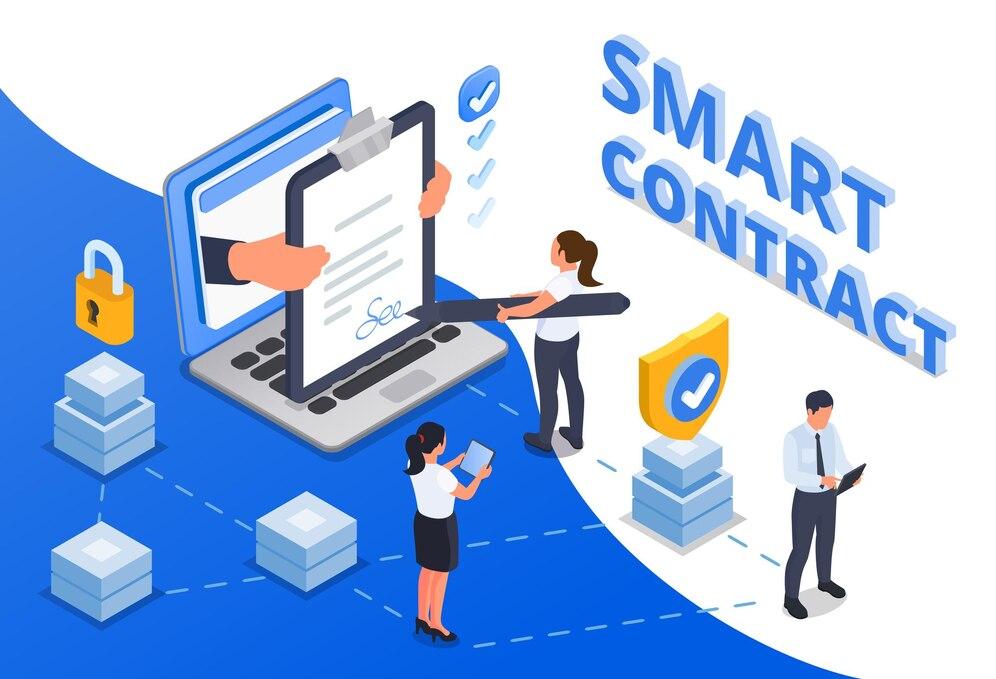
A Smart Contracts Market Platform is not a single piece of software but a decentralized, multi-layered architectural stack that provides the necessary environment for the creation, deployment, and execution of self-enforcing digital agreements. Unlike traditional software platforms that run on centralized servers owned by a single company, a smart contract platform is built upon a blockchain. This distributed ledger technology is the foundational layer, providing the core properties of immutability, transparency, and decentralization that give smart contracts their power. The platform's architecture is designed to create a trustless environment where the execution of code is guaranteed and verifiable by all participants in the network, without relying on a central authority. This architectural paradigm shift, from centralized control to decentralized consensus, is the key innovation that enables smart contracts to automate agreements in a secure and reliable manner, forming the bedrock of the emerging Web3 ecosystem.
The most critical component of the platform's architecture is the blockchain's consensus mechanism and virtual machine. The consensus mechanism (such as Proof-of-Work or Proof-of-Stake) is the protocol that the network's distributed nodes use to agree on the validity of transactions and the state of the ledger, ensuring that all participants have a single, consistent version of the truth. The virtual machine is the runtime environment where the smart contract code is actually executed. The most well-known is the Ethereum Virtual Machine (EVM), which acts as a sandboxed, distributed world computer. When a smart contract function is called, every node in the network runs the same calculation through its instance of the EVM, and the consensus mechanism ensures they all arrive at the same result. This massively redundant computation is what guarantees the contract's deterministic and tamper-proof execution. The EVM-compatibility has become a de facto standard, with many other blockchains (like Avalanche C-Chain and BNB Smart Chain) adopting EVM-compatible architectures to leverage Ethereum's vast developer community and toolset.
Built on top of this foundational blockchain layer is the smart contract development and deployment layer. This consists of the programming languages, development frameworks, and tools that developers use to write and test the smart contract code. The most popular programming language is Solidity, a high-level, contract-oriented language designed for the EVM, with syntax similar to JavaScript. Other languages like Vyper (Python-like) and Rust (used by Solana) are also gaining traction. Developers use integrated development environments (IDEs) and frameworks like Hardhat and Truffle to write, compile, and test their code in a local environment. A crucial part of this layer is the security auditing process. Before a smart contract is deployed to the main blockchain (where it becomes immutable), it is typically subjected to a rigorous security audit by specialized firms to identify potential vulnerabilities, bugs, or economic exploits. This security-focused development lifecycle is essential for building trustworthy applications, given the high stakes involved.
The final and most crucial architectural component for real-world applications is the oracle layer. A smart contract, by itself, is a deterministic program that lives in a closed system; it cannot natively access any data from the outside world, such as stock prices, sports scores, or weather data. This is by design, as external data could be a source of manipulation and would break the network's deterministic consensus. Oracles are third-party services that solve this problem by acting as a secure bridge between the blockchain and external, off-chain data sources. An oracle network, like the industry-leading Chainlink, uses a decentralized network of nodes to fetch data from multiple sources, aggregate it, and deliver a single, reliable data point to the smart contract on the blockchain. This allows smart contracts to react to real-world events. For example, a crop insurance smart contract could use an oracle to get reliable rainfall data, and if the data shows a drought, the contract can automatically trigger a payout to the farmer. The oracle layer is what makes smart contracts truly "smart" and capable of interacting with the real world.
Top Performing Market Insight Reports:

 English
 Kiswahili
 Arabic
 French
 Portuguese
 Deutsch
 Turkish
 Dutch
Dutch
 Italiano
 Russian
 Romaian
 Portuguese (Brazil)
 Greek
Greek
