


The New Real Estate: Mapping the Global Edge Data Center Market Share
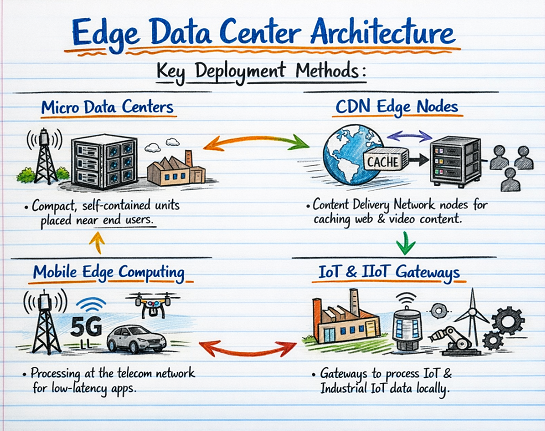
The battle for dominance in the edge computing landscape is a complex and multi-layered contest, with the distribution of the Edge Data Center Market Share revealing a fascinating struggle between different types of companies leveraging their unique strengths. This is not a simple two-way race; it is a "four-front war" being waged by cloud hyperscalers, telecommunications providers, colocation companies, and equipment manufacturers. Unlike mature technology markets, the edge is a nascent and highly fragmented space where market share is still very much up for grabs. Understanding how this share is currently divided and how these competitive dynamics are likely to evolve is crucial for anyone looking to invest in, partner with, or compete in this rapidly growing sector. The ultimate winners will be those who can successfully navigate the complexities of distributed infrastructure, build compelling ecosystems, and solve the real-world problems of latency, bandwidth, and data sovereignty for their customers, staking their claim in what is becoming the new prime real estate of the digital world.
One of the most significant segments of the market share is held by the providers of the physical infrastructure—the "picks and shovels" of the edge computing gold rush. This includes companies like Schneider Electric and Vertiv, which have a commanding share of the market for the essential power, cooling, and rack enclosure solutions that make up a data center. They have been at the forefront of innovation in micro-modular data centers (MMDCs), creating self-contained, ruggedized, and rapidly deployable solutions specifically designed for the harsh and varied conditions of the edge. On the compute and storage hardware side, traditional enterprise IT giants like Dell Technologies and Hewlett Packard Enterprise (HPE) hold a major share, adapting their server portfolios to create hardened, compact, and remotely manageable servers optimized for edge deployments. These hardware vendors form the foundational layer of the market, and their ability to produce reliable, cost-effective, and purpose-built equipment is critical to the entire ecosystem's success.
Another crucial block of market share is being carved out by companies that own the strategic real estate where edge data centers are being deployed. This group is primarily led by telecommunications providers and tower companies like American Tower and Crown Castle. These firms own hundreds of thousands of cell tower sites and central offices that are geographically distributed and often already have access to fiber connectivity and reliable power, making them ideal locations for edge nodes. By leasing space and power at these sites to cloud providers, content delivery networks, and enterprises, they are transforming their passive real estate assets into active digital infrastructure hubs. Alongside them, major colocation providers like Equinix and Digital Realty are aggressively expanding their footprint by building out networks of smaller, regional edge data centers. They are leveraging their expertise in operating multi-tenant data centers and their rich interconnection ecosystems to provide a neutral platform where businesses can easily connect to a wide range of network and cloud services at the edge.
While some players are focused on the physical assets, the battle for the "brains" of the edge—the software and management plane—is arguably the most strategic contest for long-term market share. This is where the cloud hyperscalers—AWS, Microsoft, and Google—are making their most aggressive play. By providing platforms like AWS Outposts and Azure Stack, they are aiming to make their public cloud software the de facto operating system for the edge. Their goal is not necessarily to own the physical data centers but to ensure that the applications and data workloads running within them are managed by their cloud platforms, thus capturing the high-value software and services revenue. This creates a fascinating dynamic where the hyperscalers often partner with the telcos and colocation providers, who supply the physical space, while simultaneously competing with them for the end customer's business. The long-term distribution of market share will depend heavily on the outcome of this strategic struggle between the owners of the physical infrastructure and the owners of the dominant software platforms.
Explore More Like This in Our Reports:

 English
 Kiswahili
 Arabic
 French
 Spanish
 Portuguese
 Deutsch
 Dutch
Dutch
 Italiano
 Russian
 Romaian
 Portuguese (Brazil)
 Greek
Greek
