


The Battle for the Data Cloud: Deconstructing Data Analytics Market Share Dynamics
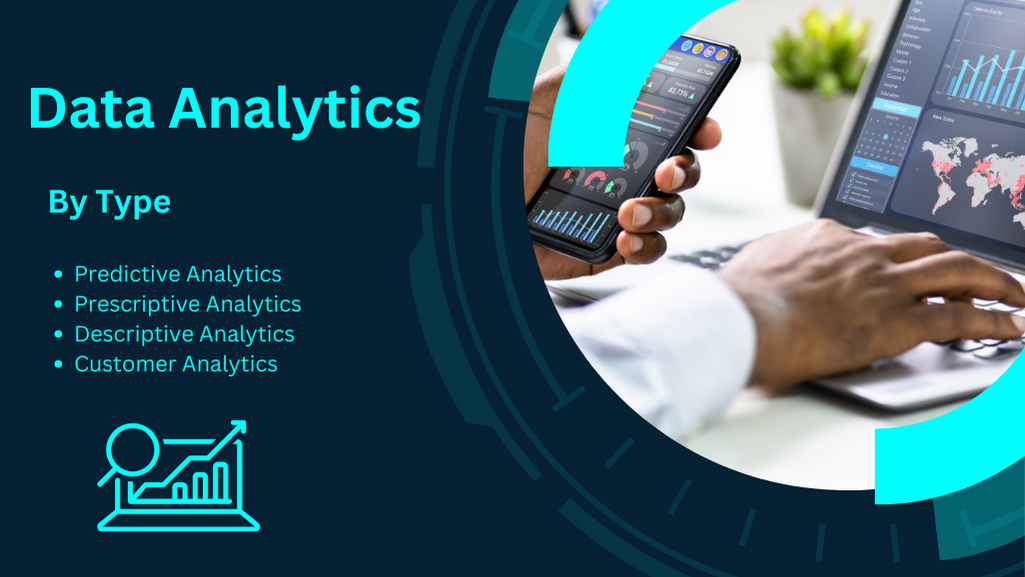
The global Data Analytics Market Share is a complex and multi-layered battlefield, with different leaders emerging in the various segments of the analytics value chain. There is no single company that dominates the entire market; instead, market share is fragmented across several key categories, including business intelligence (BI) and visualization platforms, cloud data warehouses, and advanced analytics/data science platforms. The dynamics of market share in this industry are a story of intense competition between established software giants, disruptive cloud-native innovators, and the overarching influence of the major cloud hyperscalers. The battle is not just to sell a product, but to become the central "system of insight" for an enterprise, the platform where data is stored, analyzed, and ultimately turned into business value. Understanding how this market share is distributed is key to grasping the strategic positioning of the major players in the data economy.
In the highly visible Business Intelligence (BI) and Data Visualization segment, the market share is heavily concentrated among a few key players. Microsoft, with its Power BI platform, has rapidly ascended to a dominant market leadership position. Its primary competitive advantage is its aggressive pricing and its deep integration with the broader Microsoft ecosystem, including Office 365, Azure, and Teams. For the millions of organizations that already run on Microsoft's software stack, Power BI is a natural and seamlessly integrated choice. Salesforce, through its acquisition of Tableau, holds another massive share of the market. Tableau is widely regarded as the gold standard for user-friendly, intuitive data visualization and has a fiercely loyal user base, particularly among business analysts. Qlik is another long-standing leader with a significant market share, known for its powerful associative engine and its focus on enterprise-grade governance. The competition between these three giants for the "front-end" of analytics—the dashboards and reports that business users interact with—is incredibly intense.
A completely different battle for market share is raging in the foundational layer of the modern data stack: the Cloud Data Warehouse and Data Lakehouse market. This is where the data actually lives and is processed. For years, this space was dominated by legacy on-premise vendors. However, the market has been completely reshaped by a new generation of cloud-native players. Snowflake has emerged as a disruptive force and a market leader, capturing a huge share with its unique architecture that separates storage and compute, offering unparalleled flexibility and performance. Databricks, with its "Data Lakehouse" paradigm built on open-source technologies like Apache Spark, is another major leader, particularly strong among data science and machine learning teams. At the same time, the major cloud providers are fierce competitors in this space, with Amazon Redshift, Google BigQuery, and Microsoft Azure Synapse Analytics all holding significant market share, leveraging the "home-field advantage" of running on their own cloud infrastructure.
The overarching influence on all market share dynamics is the role of the major Cloud Hyperscalers—AWS, Azure, and GCP. While they compete directly with their own native services in each segment, their more profound impact is as the foundational platform upon which the entire data analytics ecosystem runs. A significant portion of the revenue generated by companies like Snowflake, Databricks, and even Tableau comes from customers deploying their software on one of these three cloud platforms. This creates a complex "co-opetition" dynamic, where these companies are both partners and competitors with the cloud providers. The hyperscalers are capturing an immense and growing share of the total market spend, not just through their own analytics services, but through the underlying compute, storage, and networking revenue generated by all the other analytics applications running on their clouds. This makes them the ultimate power brokers and market share leaders in the broader data economy.
Explore More Like This in Our Trending Reports:
Immersive Technology In Military & Defense Market
Applied Ai In Cybersecurity Market

 English
 Kiswahili
 Arabic
 French
 Spanish
 Portuguese
 Deutsch
 Turkish
 Dutch
Dutch
 Italiano
 Romaian
 Portuguese (Brazil)
 Greek
Greek
