1. What does it mean to have fatty liver disease?
Fatty liver disease means that there is an excessive amount of fat buildup in your liver that is greater than 5-10% off its overall total weight.
Think of it this way; imagine that there was oil in a machine. At first it may keep working fine, but eventually it will start to slow down, and eventually it will break.
2. Types of Fatty Liver Disease
There are two kinds of fatty liver disease, non-alcoholic fatty liver disease, and alcoholic fatty liver disease.
-
Non-alcoholic fatty liver disease (NAFLD): is more commonly seen in persons that do not drink excessive amounts of alcohol. This may occur due to obesity, diabetes, or a poor lifestyle.
-
Alcoholic fatty liver disease (AFLD): develops due to excessive alcohol use. The disease, is more likely to progress, the more an individual drinks.
3. What causes fatty liver disease?
There are a number of reasons for the disease to occur. Here are a few reasons:
-
obesity
-
high cholesterol
-
type 2 diabetes
-
sedentary lifestyle
-
excess alcohol use
To put it simply, your body is producing more fat than your liver is able to process, and the excess fat will get stored in your liver.
4. What are the symptoms of premature fatty liver disease?
What is more shocking, is that there are not that many early symptoms associated with disease.
This is the reason that the condition often goes unnoticed.
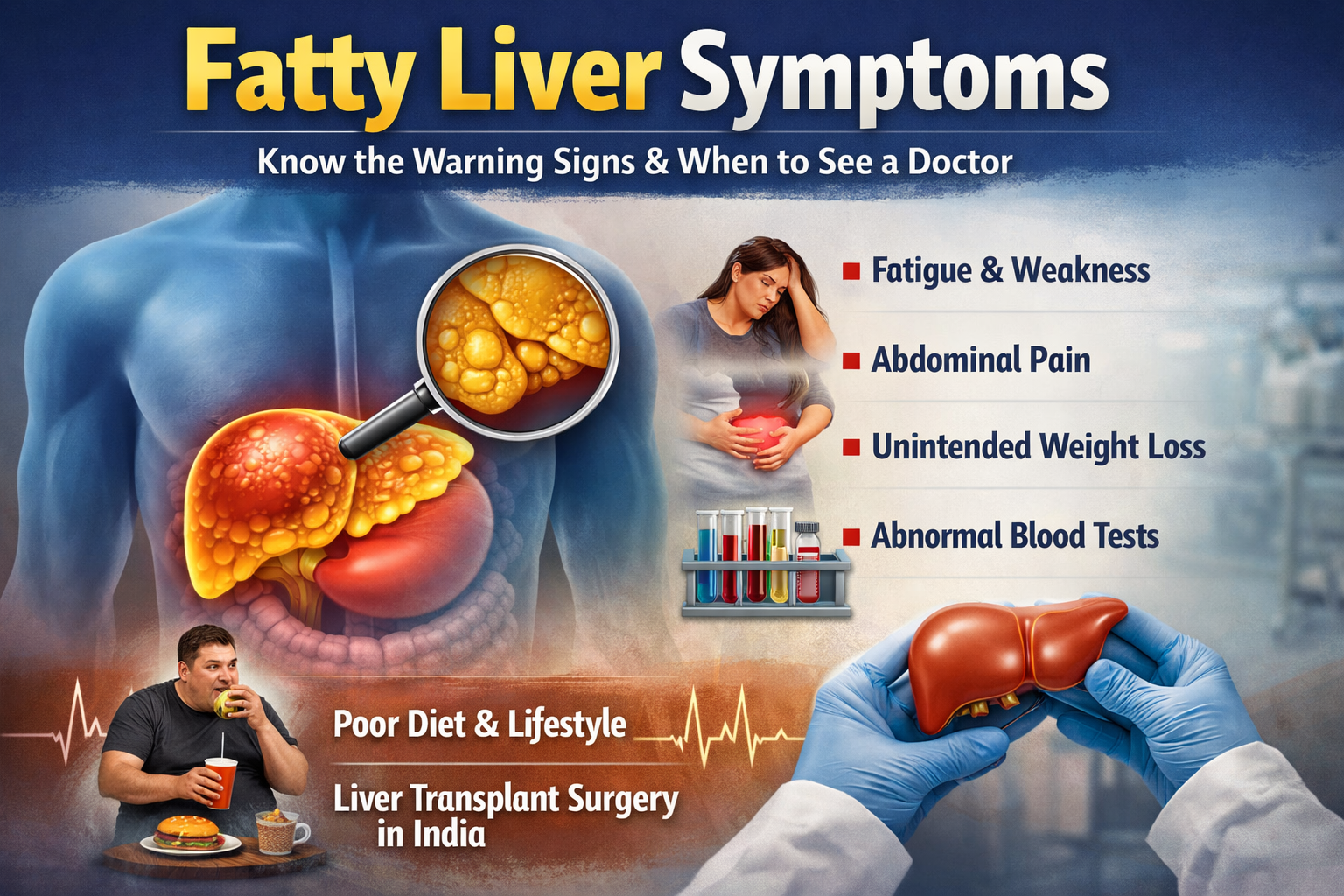
5. Symptoms of Advanced Fatty Liver
There is a more pronounced set of symptoms at every stage of the disease, which includes the following:
-
persistent fatigue
-
abdominal discomfort
-
weight loss
-
general weakness
-
ascites
The liver becomes stressed at this point.
6. Signs of the Condition You May Overlook
Your body may show signs of an underlying problem, for instance:
-
insulin resistance dark neck
-
elevated liver enzymes on blood tests
-
persistent abdominal discomfort
-
loss of appetite
These symptoms are often overlooked, but may indicate you have fatty liver disease.
7. Who Is It Most Likely To Effect?
If you are more likely to be affected if you:
-
are obese or overweight
-
are diabetic or prediabetic
-
have a junk food or processed food habit
-
have a sedentary lifestyle
Due to poor lifestyle choices, young people and children are increasingly being diagnosed.
8. Relationship Between Lifestyle and Fatty Liver Disease
Your lifestyle choices are an important factor.
Your liver is a storage space. It can be likened to a storage room. If you keep dumping sugar and unhealthy food into it, it becomes overloaded.
Fatty liver disease is caused by a combination of specific lifestyle habits, including:
-
High sugar consumption
-
Fast food consumption
-
Sedentary lifestyle
-
Poor sleep habits
9. When Should You Talk to a Doctor?
Consider talking to a physician if you experience:
Early visits may decrease the chance of more severe problems developing.
10. Diagnosis of Fatty Liver
Diagnosis of fatty liver is commonly performed via:
Fatty liver is often diagnosed among patients in routine health screenings.
11. Is Fatty Liver Reversible?
The good news is that fatty liver is reversible in the early stage if patients take the following steps:
Your liver health can be restored.
12. Available Treatment Strategies
There is no “magic pill,” treatment is aimed at lifestyle changes.
Treatment includes lifestyle changes such as:
-
Balanced diet
-
Regular exercise
-
Weight control
Medications
Monitoring
13. Role of Liver Transplant in Severe Cases
A transplant may become necessary if fatty liver disease advances to cirrhosis or liver failure.
This is where the guidance of an expert liver transplant surgeon in India becomes important. Affordable care and high success rates make India a preferred country for advanced liver transplant surgery.
A transplant is usually considered when:
-
There is permanent liver damage
-
Other therapies do not work
-
There are complications which are life threatening
14. Prevention Tips
Prevention is always better than cure, right?
Here’s what you can do:
-
Eat a balanced diet (more fruits and vegetables)
-
Exercise at least 30 minutes daily
-
Don't drink alcohol
-
Avoid obesity
-
Don't forget to drink water
Even small changes can make a big difference.
15. Long-Term Complications
If ignored, fatty liver can lead to:
That's why, early detection is so important.
Conclusion
Fatty liver disease might start silently, but it doesn't stay that way forever. Think of it like a slow leak - it is easy to ignore it at first, but it will be damaging.
The good news? Your liver has an amazing ability to heal itself if you take action early.
Recognizing the symptoms of fatty liver, improving your diet, and getting professional assistance on time can support the health of your liver and your whole body.
Even advanced stages of liver disease don't mean all hope is lost; modern medicine, along with highly trained professionals' liver transplant surgeon in India, provide life-saving treatments.
FAQs
1. What are the first signs of fatty liver?
Early signs include fatigue, mild abdominal pain, and low energy. Some individuals may not exhibit any of these symptoms.
2. Can fatty liver go away on its own?
Yes, fatty liver can go away on its own with changes in your diet, exercise, and overall lifestyle, in the early stages.
3. Is fatty liver dangerous?
Untreated fatty liver can lead to cirrhosis, liver failure, or even liver cancer.
4. How long does it take to reverse fatty liver?
Several months of healthy lifestyle changes are required to reverse fatty liver, and results will vary by individual.
5. When is a liver transplant needed for fatty liver?
Liver transplants are required when fatty liver disease progresses to liver damage or failure, and other treatments are no longer effective.




 English
 Kiswahili
 Arabic
 French
 Spanish
 Deutsch
 Turkish
 Dutch
Dutch
 Italiano
 Russian
 Romaian
 Portuguese (Brazil)
 Greek
Greek
