


The Evolution of Loot: Itemization in Diablo 4
For any action role-playing game, the loot system is the beating heart. Players grind, optimize, and theorycraft not for the sake of combat alone, but for the promise of better gear. Diablo 4 entered a genre defined by giants, including its own predecessors, and its approach to itemization reflects lessons learned from decades of iteration. The system is neither a simple copy of Diablo 2’s rune words nor a continuation of Diablo 3’s set-driven meta. Instead, Diablo 4 has forged its own identity, one built on flexibility, player choice, and the pursuit of incremental perfection.
At the foundation of Diablo 4’s itemization are item tiers. Sacred and Ancestral items drop in higher difficulties, offering increased stat ranges and the potential for more powerful affixes. This tiered system creates clear progression milestones. A player in World Tier 3 hunts Sacred gear to prepare for the jump to World Tier 4, where Ancestral items become the new baseline. This structure ensures that loot remains relevant throughout the endgame, with each difficulty bump resetting the chase without invalidating prior progress entirely.
Affixes, the random stat modifiers on gear, form the core of itemization depth. Unlike Diablo 3, which simplified stats to a handful of universally desirable options, Diablo 4 returned to a more complex system. Items can roll with a wide range of affixes, from core stats like Critical Strike Chance and Vulnerable Damage to situational bonuses like Damage to Crowd Controlled Enemies or Damage to Close Enemies. This complexity creates meaningful trade-offs. A ring might offer high Critical Strike Chance but low Vulnerable Damage, forcing the player to decide which stat aligns with their build’s scaling mechanics.
The Codex of Power and legendary aspects represent one of Diablo 4’s most significant innovations. Instead of legendary items being purely random drops with fixed powers, aspects can be extracted from legendary gear and imprinted onto rare items. This system separates the stat budget of an item from its unique effect. A player can find a perfectly rolled rare amulet with ideal affixes, then imprint a legendary aspect to transform it into a best-in-slot piece. This flexibility reduces the frustration of finding a great legendary with poor stats or a perfect rare without a useful power. It empowers players to craft their ideal gear rather than relying solely on random drops.
The role of unique items in Diablo 4 differs from previous entries. Uniques are fixed items with predetermined affixes and powerful, build-defining effects. Unlike legendaries, they cannot be extracted or imprinted. Some uniques are essential for specific builds, while others offer niche utility. The rarity of certain uniques, combined with the introduction of targeted farming through endgame bosses like Duriel, has created a structured chase for high-value items. This approach gives players clear goals while preserving the excitement of random drops.
Runes, a beloved system from Diablo 2, did not appear at launch, but their eventual introduction in the Vessel of Hatred expansion marked a significant expansion of itemization. Runes in Diablo 4 function differently than their predecessors, socketing into gear to provide conditional effects based on the combination of Ritual and Invocation runes. This system adds another layer of customization, allowing players to tailor their builds with effects that trigger during specific gameplay conditions. It bridges the gap between the deterministic crafting of Diablo 2 and the streamlined systems of Diablo 3.
Crafting and upgrading systems provide additional control over gear progression. Players can reroll a single affix at the Occultist, hunt for higher stat ranges through Blacksmith upgrades, and socket gems for bonus resistances or primary stats. These systems require significant resource investment, ensuring that perfecting a piece of gear remains a long-term goal rather than a quick process. The gold and material economy ties directly into endgame activities, giving every Helltide and Nightmare Dungeon a purpose beyond simple experience gain.
Not every aspect of Diablo 4’s itemization has been universally praised. Launch issues included underwhelming unique items, an overreliance on Vulnerable Damage as a required stat, and a convoluted affix pool that made evaluating gear unnecessarily complex. The development team has responded with significant patches, rebalancing stats, buffing underperforming uniques, and streamlining the affix system. Seasons have introduced new aspects and uniques that shake up the meta, ensuring that itemization evolves alongside player feedback.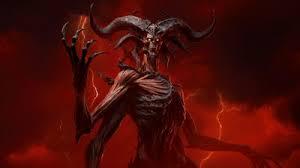
For players who enjoy theorycrafting, Diablo 4’s loot system offers deep engagement. The combination of affix selection, aspect imprinting, unique hunting, and rune crafting creates a layered progression where perfecting a character is a matter of planning and patience. Each upgrade, whether a 2% increase on a critical affix or the final piece of a build-defining unique, feels earned. In a genre driven by the promise of better loot, Diablo S12 Items has built a system that respects player investment while leaving room for the kind of aspirational chasing that keeps Sanctuary alive.

 English
 Kiswahili
 Arabic
 French
 Spanish
 Portuguese
 Deutsch
 Turkish
 Dutch
Dutch
 Italiano
 Romaian
 Portuguese (Brazil)
 Greek
Greek
