What is Vitamin K?
Vitamin K is a fat-soluble vitamin that plays a crucial role in blood clotting and bone health. Without it, even a small cut could lead to excessive bleeding.
There are two main types:
Why is Vitamin K Important for Liver Health?
The liver is like a factory that produces clotting factors. But here’s the catch—it needs Vitamin K to do its job.
Key role:
If your liver is damaged, it struggles to use Vitamin K effectively—even if your diet is good.
Why Liver Patients Are Prone to Vitamin K Deficiency
You might think, “If I eat well, I should be fine, right?” Not always.
In liver disease:
-
Fat absorption is reduced
-
Bile production is impaired
-
Vitamin K storage decreases
This creates a perfect storm for deficiency.
Common Causes of Vitamin K Deficiency in Liver Disease
Let’s break it down simply:
1. Reduced Bile Production
Bile helps absorb fat-soluble vitamins. Without enough bile, Vitamin K isn’t absorbed properly.
2. Poor Diet
Many liver patients experience appetite loss or dietary restrictions.
3. Antibiotic Use
Antibiotics can kill gut bacteria that produce Vitamin K.
4. Cholestasis (Blocked Bile Flow)
This condition directly affects Vitamin K absorption.
5. Alcoholic Liver Disease
Chronic alcohol use damages liver cells and nutrient processing.
Signs and Symptoms to Watch For
Vitamin K deficiency doesn’t always shout—it often whispers first.
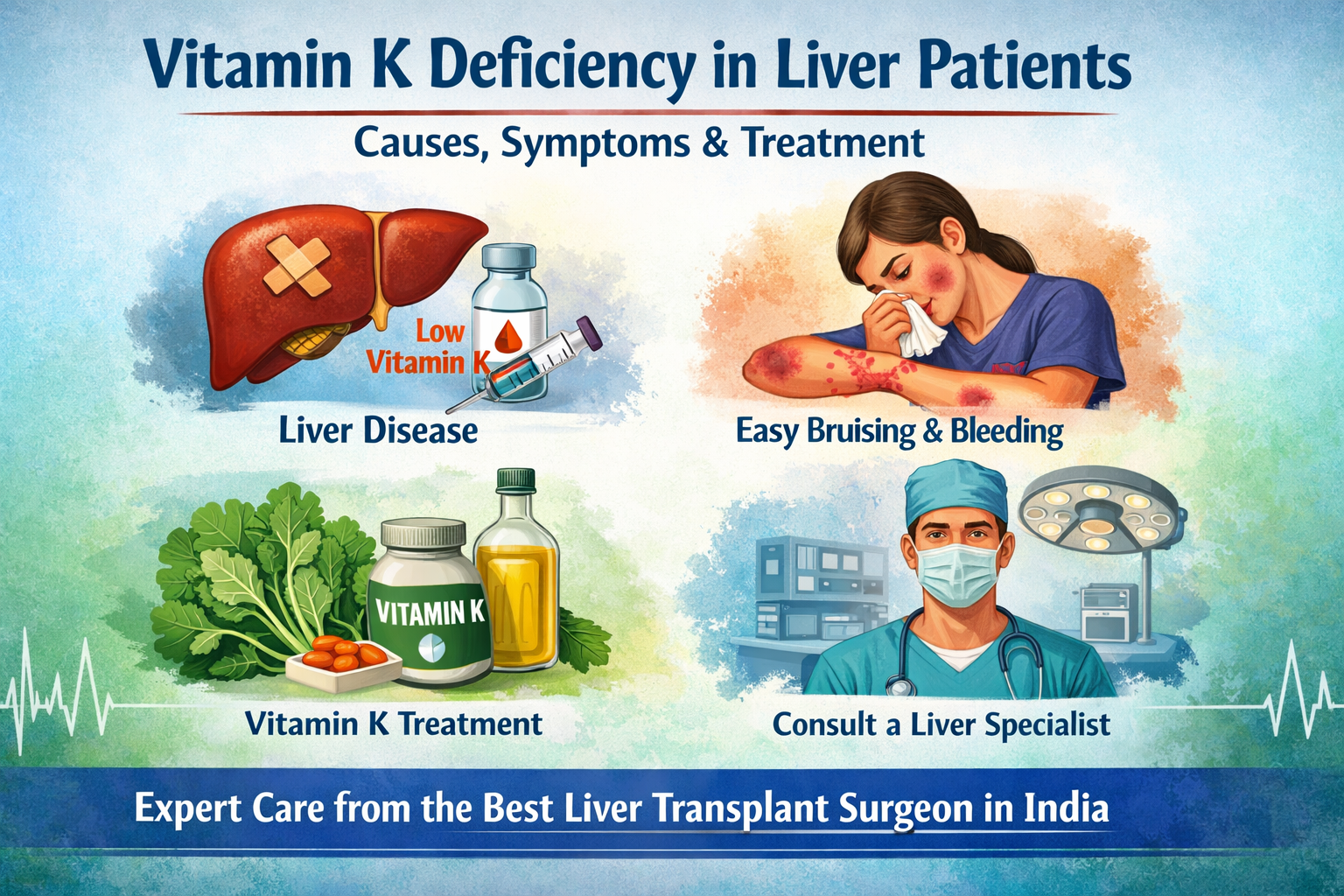
Common symptoms include:
-
Easy bruising
-
Bleeding gums
-
Nosebleeds
-
Blood in urine or stool
-
Heavy menstrual bleeding
In severe cases:
-
Internal bleeding
-
Delayed wound healing
If you notice these signs, don’t ignore them.
How Vitamin K Deficiency Affects Blood Clotting
Here’s a simple analogy:
Imagine your blood clotting system as a construction team fixing a broken road. Vitamin K is the “cement.” Without it, the team shows up—but can’t fix anything.
This leads to:
Types of Liver Diseases Linked to Vitamin K Deficiency
Certain liver conditions increase the risk:
The more advanced the disease, the higher the deficiency risk.
Diagnosis: How Doctors Detect It
Doctors don’t guess—they test.
Common diagnostic tools:
If PT is prolonged, vitamin K deficiency may be suspected.
Treatment Options for Vitamin K Deficiency
The good news? It’s treatable.
1. Vitamin K Injections
Used in severe cases for quick correction.
2. Oral Supplements
Helpful in mild to moderate deficiency.
3. Treating Underlying Liver Disease
Addressing the root cause is essential.
Role of Diet in Managing Vitamin K Levels
Food can be your first line of defense.
Vitamin K-rich foods:
-
Spinach
-
Kale
-
Broccoli
-
Cabbage
-
Green tea
But remember—if liver function is poor, diet alone may not be enough.
When is Vitamin K Supplementation Needed?
Doctors may recommend supplements when:
Never self-medicate—always consult a doctor.
Complications if Left Untreated
Ignoring Vitamin K deficiency can be dangerous.
Possible complications:
Prevention Tips for Liver Patients
Prevention is always better than cure.
Simple steps:
When to Consult a Specialist
If you have liver disease and notice bleeding symptoms, consult a specialist immediately.
In advanced cases, expert care from the best liver transplant surgeon in india can make a life-saving difference—especially if liver failure is involved.
Lifestyle Changes for Better Liver Health
Your daily habits matter more than you think.
Healthy lifestyle tips:
Small changes can lead to big improvements.
Conclusion
Vitamin K deficiency in liver patients is more common than most people realize—but it’s also manageable with the right care.
By understanding the causes, recognizing the symptoms early, and taking timely action, you can prevent serious complications. Whether it’s through diet, supplements, or expert medical guidance, taking care of your liver means taking care of your overall health.
Remember, your liver works hard for you every day—give it the support it deserves.
FAQs
1. What causes Vitamin K deficiency in liver patients?
Vitamin K deficiency is mainly caused by poor absorption, reduced bile production, and liver damage affecting clotting factor production.
2. Can Vitamin K deficiency be reversed?
Yes, with proper treatment such as supplements, injections, and addressing the underlying liver condition, it can be reversed.
3. Is Vitamin K deficiency dangerous?
Yes, it can lead to severe bleeding and complications if not treated on time.
4. Which foods are rich in Vitamin K?
Green leafy vegetables like spinach, kale, and broccoli are excellent sources of Vitamin K.
5. When should I see a liver specialist?
If you experience unusual bleeding or bruising or have diagnosed liver disease, consult a specialist immediately for proper evaluation.




 English
 Kiswahili
 Arabic
 French
 Spanish
 Portuguese
 Deutsch
 Turkish
 Dutch
Dutch
 Italiano
 Russian
 Romaian
 Portuguese (Brazil)
