


How Are Metal Contacts Designed in WTB Wire to Board Connectors?
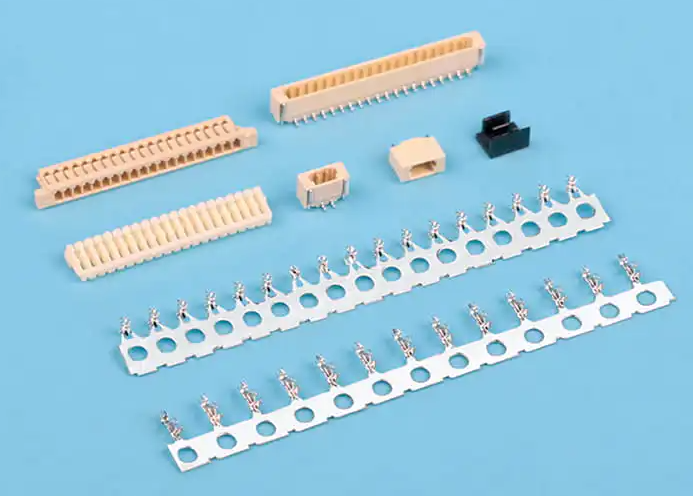
WTB (Wire to Board) connectors play a crucial role in providing reliable electrical connections between wires and printed circuit boards (PCBs). One of the key components that contributes to the overall performance of these connectors is the metal contact design. The design of these metal contacts significantly influences the connector's durability, conductivity, and resistance to wear. In this article, we will explore how the metal contacts in WTB Wire to Board Connectors are designed and why this design is so important for the performance of the connector.
Material Selection for Metal Contacts
The first step in designing the metal contacts for WTB Wire to Board Connectors is selecting the right material. The metal contacts are typically made from high-quality metals such as phosphor bronze, copper alloy, or stainless steel. These materials are chosen for their excellent electrical conductivity, corrosion resistance, and mechanical strength. Copper alloy is a popular choice because it provides good conductivity, while phosphor bronze offers excellent resilience and fatigue resistance, making it ideal for connectors subjected to repeated use.
In many cases, the metal contacts are also coated with a layer of gold, tin, or nickel. Gold plating provides a high level of conductivity and corrosion resistance, ensuring that the contact surface remains intact over time. Tin and nickel coatings are used to enhance corrosion resistance, especially in environments where the connector may be exposed to moisture or other harsh conditions.
Contact Shape and Structure
The shape and structure of the metal contacts are carefully designed to ensure optimal contact with the wire and the PCB. Most WTB connectors feature a spring-like contact design, where the metal contacts are shaped to provide a secure connection with the wire leads. This design helps to maintain a stable connection, even when the connector is subjected to vibrations or mechanical stress.
The contact points are often designed with a wiper mechanism, where the metal contact presses gently against the surface of the wire or PCB lead, ensuring low resistance and reliable electrical performance. The contact surface may also have a slightly raised or tapered design, which helps to improve the contact area and ensure a more secure connection.
Durability and Wear Resistance
Durability is a critical factor when designing the metal contacts for WTB Wire to Board Connectors. Since connectors often experience repeated mating and unmating cycles, the metal contacts must be resistant to wear and fatigue. The design of these contacts includes features that help to minimize wear, such as low-contact resistance and a durable coating. The choice of material and coating also plays a significant role in enhancing the longevity of the contacts.
To further improve durability, manufacturers often test the contacts for performance under various environmental conditions, such as high temperature, humidity, and vibration. This ensures that the metal contacts can withstand real-world conditions and provide reliable connections throughout the lifespan of the connector.
Electrical Performance
The metal contacts in WTB Wire to Board Connectors are designed with a focus on ensuring optimal electrical performance. Low contact resistance is crucial for minimizing power loss and preventing overheating. The contact materials and design are selected to maintain stable electrical performance, even under high current or voltage conditions. Additionally, the metal contacts are designed to prevent arcing or sparking, which could damage the PCB or the connected wires.
The design of metal contacts in WTB Wire to Board Connectors is a complex process that involves careful selection of materials, shaping, and attention to durability and electrical performance. By using high-quality metals and coatings, as well as designing the contacts for optimal mechanical and electrical performance, manufacturers ensure that WTB connectors provide reliable and long-lasting connections. Whether for consumer electronics, automotive applications, or industrial machinery, the metal contacts in WTB connectors are engineered to deliver performance and durability in a variety of demanding environments.
1、CKT: 2Pin to 20Pin
2、Current rating: 1A AC/DC
3、Voltage rating(max): 50V, AC/DC
4、Working Temperature: -25°C~+85°C,
(Including temperature rise in applying electrical current)
5、Contact resistance: Initial value S20mΩ
After environmental testing≤30mΩ
6、Insulation resistance: 2100MΩ
7、Withstand voltage: 500VAC(rms)
8、Applicable wire: AWG #32 to #28
9、Applicable PCB board thickness: 1.6mm to 2.0mm

 English
 Kiswahili
 Arabic
 French
 Spanish
 Portuguese
 Deutsch
 Turkish
 Dutch
Dutch
 Italiano
 Russian
 Portuguese (Brazil)
 Greek
Greek
