


Sensitivity of the Auto Flash Welding Helmet’s Sensing System
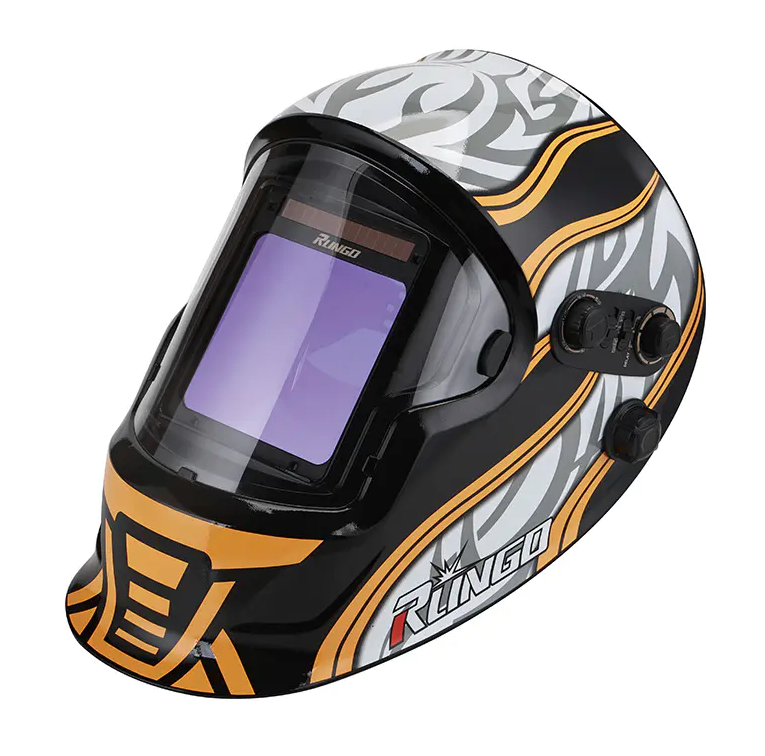
When it comes to welding, one of the most crucial features in ensuring safety and comfort is the helmet’s sensitivity to the welding arc. The Auto Flash Welding Helmet stands out for its advanced sensing system, designed to detect the moment a welding arc is created and immediately adjust the lens for protection. But how sensitive is this system, and does it meet the needs of welders for various types of welding tasks? Let’s dive deeper into the sensor's capabilities.
Quick Response to Arc Detection
The core function of the Auto Flash Welding Helmet is its ability to detect the arc as soon as it is initiated. The sensor system in these helmets is designed to react instantly to the brightness of the arc. With highly sensitive sensors, the helmet can automatically darken the lens in a fraction of a second, typically within 1/25,000 seconds. This rapid response is essential for protecting the welder’s eyes from harmful UV and IR radiation. The sensitivity of the sensor ensures that the welder’s eyes are shielded immediately, even in fast-paced welding environments.
Adjustable Sensitivity Settings
While the Auto Flash Welding Helmet is equipped with a high-sensitivity sensor, many models allow welders to adjust this sensitivity to suit their specific needs. The ability to fine-tune the sensor’s responsiveness is particularly important when dealing with different types of welding processes. For example, in TIG welding, where the arc may be less intense but requires precise control, a welder may prefer a lower sensitivity setting to avoid unnecessary darkening. On the other hand, in MIG or stick welding, where the arc intensity fluctuates more rapidly, a higher sensitivity setting ensures that the helmet reacts quickly to changes in light, maintaining eye protection at all times.
Performance in Varied Welding Conditions
The Auto Flash Welding Helmet’s sensor is designed to perform well in a variety of welding environments, whether you're working indoors, outdoors, or in low-light conditions. The sensitivity of the system ensures that the lens adjusts quickly, even when the light conditions change rapidly. However, some external factors, such as ambient light or glare, may affect the sensor’s response. To combat this, high-quality helmets feature advanced filters that help to isolate the welding arc from other light sources, ensuring accurate and responsive adjustments.
Balancing Sensitivity with Comfort
While a sensitive sensor system is important, it is equally crucial to ensure that the lens does not darken prematurely or unnecessarily. The Auto Flash Welding Helmet’s sensitivity settings are designed to find a balance between immediate protection and comfort. A welder should never have to deal with constant flickering or over-darkening, which could strain their eyes. The best models allow for gradual transitions, so the welder can focus on the work without distraction or discomfort.
The Auto Flash Welding Helmet offers an extremely sensitive sensing system that quickly detects the welding arc and provides immediate protection. With adjustable sensitivity settings, welders can customize the helmet's responsiveness to suit different welding tasks, ensuring both safety and comfort. Whether for high-speed MIG welding or more delicate TIG work, the helmet’s sensor system provides fast and reliable performance across various welding environments, making it an invaluable tool for every welder.

 English
 Kiswahili
 Arabic
 French
 Spanish
 Portuguese
 Deutsch
 Dutch
Dutch
 Italiano
 Russian
 Romaian
 Portuguese (Brazil)
 Greek
Greek
