


Fatty Liver Gastric Pain: 10 Ways to Manage It
Introduction
Have you ever felt a dull pain or heaviness in your upper abdomen after eating, along with bloating or acidity? Many people assume it is just simple gas or indigestion. However, sometimes the real cause lies deeper — in your liver.
Fatty liver disease, a condition where fat accumulates inside liver cells, is becoming increasingly common due to modern lifestyle habits. Surprisingly, it can also trigger gastric pain, bloating, and digestive discomfort.
Think of your liver like the body’s chemical factory. It processes nutrients, filters toxins, and supports digestion. But when excess fat builds up, the factory slows down. As a result, digestion becomes inefficient, and symptoms like gastric pain begin to appear.
Fatty liver can cause gastric pain and bloating. Learn simple ways to manage symptoms and when to consult the best liver transplant surgeon in india
The good news? With the right lifestyle changes and medical guidance, fatty liver and related gastric discomfort can often be managed effectively.
Let’s explore practical and effective ways to reduce gastric pain associated with fatty liver disease.
Understanding Fatty Liver Disease
Fatty liver disease occurs when excess fat accumulates in the liver cells. This condition is broadly categorized into two types:
Non-Alcoholic Fatty Liver Disease (NAFLD)
This occurs in people who drink little or no alcohol and is commonly associated with obesity, diabetes, and poor diet.
Alcoholic Fatty Liver Disease
This type develops due to excessive alcohol consumption over time.
In many cases, fatty liver may not cause obvious symptoms initially. However, as the condition progresses, digestive problems such as gastric discomfort, bloating, and upper abdominal pain may start appearing.
Why Fatty Liver Causes Gastric Pain
Many people wonder how a liver condition can cause stomach pain. The explanation is quite simple.
When the liver becomes enlarged due to fat accumulation, it can put pressure on nearby organs, including the stomach and digestive tract.
This pressure may lead to symptoms such as:
-
Bloating
-
Acidity
-
Upper abdominal discomfort
-
Feeling full quickly
Additionally, fatty liver may slow down digestion and affect bile production, which further contributes to gastric issues.
Recognizing Symptoms Linked to Fatty Liver
Fatty liver often develops silently, but certain symptoms may indicate that your digestive discomfort is connected to liver health.
Common signs include:
-
Pain in the upper right abdomen
-
Persistent bloating
-
Frequent acidity or gas
-
Fatigue
-
Loss of appetite
-
Unexplained weight gain
If these symptoms persist for weeks, it may be wise to consult a liver specialist for evaluation.
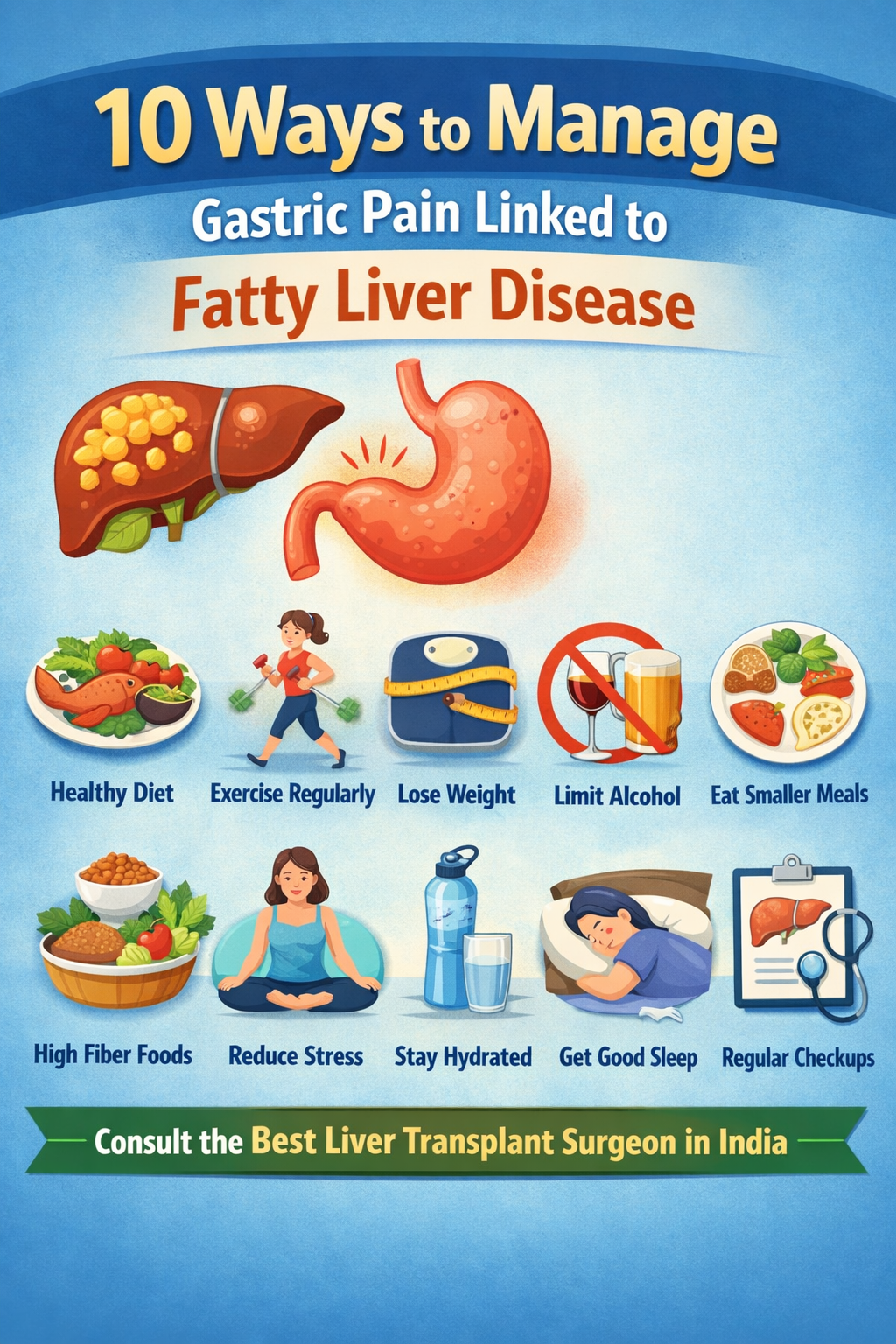
1. Improve Your Diet to Support Liver Health
Your diet plays a crucial role in controlling fatty liver and related gastric pain.
A liver-friendly diet includes:
-
Fresh fruits
-
Green vegetables
-
Whole grains
-
Lean protein
-
Healthy fats
These foods help reduce fat accumulation in the liver and support better digestion.
Think of it this way: your liver thrives on clean fuel, just like a car runs better on high-quality petrol.
2. Reduce Oil and Processed Foods
Highly processed foods are among the biggest triggers of fatty liver.
These foods contain:
-
Trans fats
-
Excess sugar
-
Refined carbohydrates
Regular consumption can increase fat storage in the liver and worsen gastric symptoms.
Foods to limit include:
-
Fried snacks
-
Fast food
-
Packaged sweets
-
Sugary drinks
Replacing these with home-cooked meals can make a significant difference.
3. Maintain a Healthy Body Weight
Being overweight is one of the leading causes of fatty liver disease.
Even losing 5–10% of body weight can significantly reduce liver fat and improve digestive symptoms.
Healthy weight management can:
-
Reduce liver inflammation
-
Improve metabolism
-
Lower gastric discomfort
Slow and steady weight loss works better than crash diets.
4. Stay Physically Active
Exercise is one of the most powerful tools for managing fatty liver.
Regular physical activity helps:
-
Burn excess fat
-
Improve insulin sensitivity
-
Reduce liver fat accumulation
Simple exercises include:
-
Brisk walking
-
Cycling
-
Swimming
-
Yoga
Just 30 minutes of exercise five days a week can improve liver health dramatically.
5. Eat Smaller and Frequent Meals
Large meals can overload the digestive system and worsen gastric discomfort.
Instead, try:
-
Eating smaller meals
-
Spacing meals every 3–4 hours
This approach helps:
-
Reduce acidity
-
Improve digestion
-
Lower pressure on the liver and stomach
Your digestive system works better when it processes food gradually rather than all at once.
6. Limit Alcohol Consumption
Alcohol can worsen fatty liver and trigger gastric pain.
Even moderate drinking can stress the liver if fat accumulation is already present.
Reducing or completely avoiding alcohol helps the liver:
-
Recover
-
Reduce inflammation
-
Improve digestive function
In many early fatty liver cases, lifestyle changes alone can reverse liver fat.
7. Improve Gut Health with Fiber
Fiber plays a key role in digestive health.
High-fiber foods help regulate digestion and reduce bloating.
Examples include:
-
Oats
-
Brown rice
-
Beans
-
Lentils
-
Vegetables
Fiber also supports beneficial gut bacteria, which can indirectly improve liver function.
8. Manage Stress and Sleep Quality
Stress may not seem connected to liver health, but it affects digestion significantly.
Chronic stress can:
-
Increase acidity
-
Slow digestion
-
Worsen gastric pain
Simple strategies such as deep breathing, meditation, and proper sleep can improve both digestive and liver health.
9. Drink Enough Water Daily
Water helps the body flush toxins and maintain digestive balance.
Staying hydrated supports:
-
Proper metabolism
-
Liver detoxification
-
Smooth digestion
Aim for 8–10 glasses of water daily, especially if you experience frequent acidity or bloating.
10. Regular Medical Checkups
Fatty liver should not be ignored, even if symptoms seem mild.
Regular medical checkups help monitor:
-
Liver enzymes
-
Fat accumulation
-
Liver inflammation
In rare cases, untreated fatty liver can progress to liver fibrosis, cirrhosis, or liver failure.
Early diagnosis ensures timely treatment and better outcomes.
When to Seek Expert Liver Treatment
If gastric pain is persistent or accompanied by symptoms such as jaundice, severe fatigue, or swelling, it is important to seek medical help.
Advanced liver disease may require specialized care from an experienced hepatologist or the best liver transplant surgeon in india.
These experts can evaluate the severity of liver damage and recommend appropriate treatment options.
Long-Term Liver Care Strategies
Managing fatty liver is not just about temporary diet changes. It requires long-term lifestyle adjustments.
Key strategies include:
-
Balanced nutrition
-
Regular exercise
-
Healthy weight maintenance
-
Avoiding excessive alcohol
-
Regular health screening
When these habits become part of daily life, the liver can gradually recover and function more efficiently.
Conclusion
Fatty liver disease is becoming increasingly common, but the encouraging news is that it is often reversible in its early stages.
Gastric pain linked to fatty liver usually results from digestive imbalance and liver enlargement. By making simple lifestyle changes — such as improving diet, staying active, managing weight, and reducing alcohol — many people can significantly reduce their symptoms.
Remember, your liver works tirelessly every day to keep your body healthy. Taking care of it is one of the best investments you can make for long-term well-being.
And if symptoms persist or the condition becomes severe, consulting an experienced liver specialist or the best liver transplant surgeon in india can help guide the right treatment path.
FAQs
1. Can fatty liver cause stomach pain?
Yes. Fatty liver can cause discomfort in the upper abdomen due to liver enlargement and digestive disturbances.
2. How can I reduce gastric pain caused by fatty liver?
Lifestyle changes such as a healthy diet, regular exercise, weight loss, and avoiding alcohol can significantly reduce symptoms.
3. Is fatty liver reversible?
Yes. In many cases, fatty liver can be reversed through diet changes, weight management, and improved lifestyle habits.
4. Which foods should be avoided in fatty liver disease?
Foods high in sugar, fried items, processed snacks, and alcohol should be limited to prevent further liver fat accumulation.
5. When should I consult a liver specialist?
If symptoms like persistent abdominal pain, fatigue, jaundice, or swelling occur, it is important to consult a liver expert or the best liver transplant surgeon in india for evaluation.

 English
 Kiswahili
 Arabic
 French
 Spanish
 Portuguese
 Deutsch
 Turkish
 Dutch
Dutch
 Italiano
 Romaian
 Portuguese (Brazil)
 Greek
Greek
