


Edge Colocation Market Leaders Driving the Future of Low-Latency Computing
Introduction
As digital services become increasingly data-intensive, enterprises are under growing pressure to deliver faster, more responsive applications. Technologies such as IoT, artificial intelligence, real-time analytics, autonomous systems, and immersive digital experiences demand ultra-low latency infrastructure capable of processing massive volumes of data in near real time.
Edge Colocation is emerging as a critical solution to address these challenges. By bringing compute and storage infrastructure closer to end users, devices, and applications, edge colocation significantly reduces latency and improves application performance. This decentralized infrastructure model enables organizations to process data locally while still leveraging centralized cloud resources when needed.
As organizations accelerate digital transformation initiatives, edge colocation is becoming a key enabler for next-generation applications, helping businesses optimize bandwidth usage, enhance operational efficiency, and support geographically distributed operations.
Click Here For More Information: https://qksgroup.com/market-research/spark-matrix-edge-colocation-q3-2024-8067
Market / Industry Overview
The rapid growth of connected devices, data-intensive applications, and distributed digital services is driving a fundamental shift in how infrastructure is deployed and managed.
QKS Group defines Edge Colocation as a strategically distributed data infrastructure model that places data center resources at network edges, closer to users and devices, to support ultra-low latency data processing and localized computing requirements.
In this model, compact and modular data centers are deployed in tier-two cities, regional markets, or remote locations. These edge facilities provide secure infrastructure with power, cooling, and high-speed network connectivity. They allow organizations to deploy hardware closer to the source of data generation while maintaining direct connectivity to cloud ecosystems.
Edge colocation facilities enable enterprises to:
- Process data locally for faster response times
- Reduce bandwidth usage by minimizing long-distance data transfers
- Support real-time applications such as AI, IoT, and video analytics
- Ensure compliance with regional data sovereignty requirements
QKS Group’s Edge Colocation market research offers comprehensive analysis of the global market landscape, including emerging infrastructure trends, vendor strategies, and future growth opportunities.
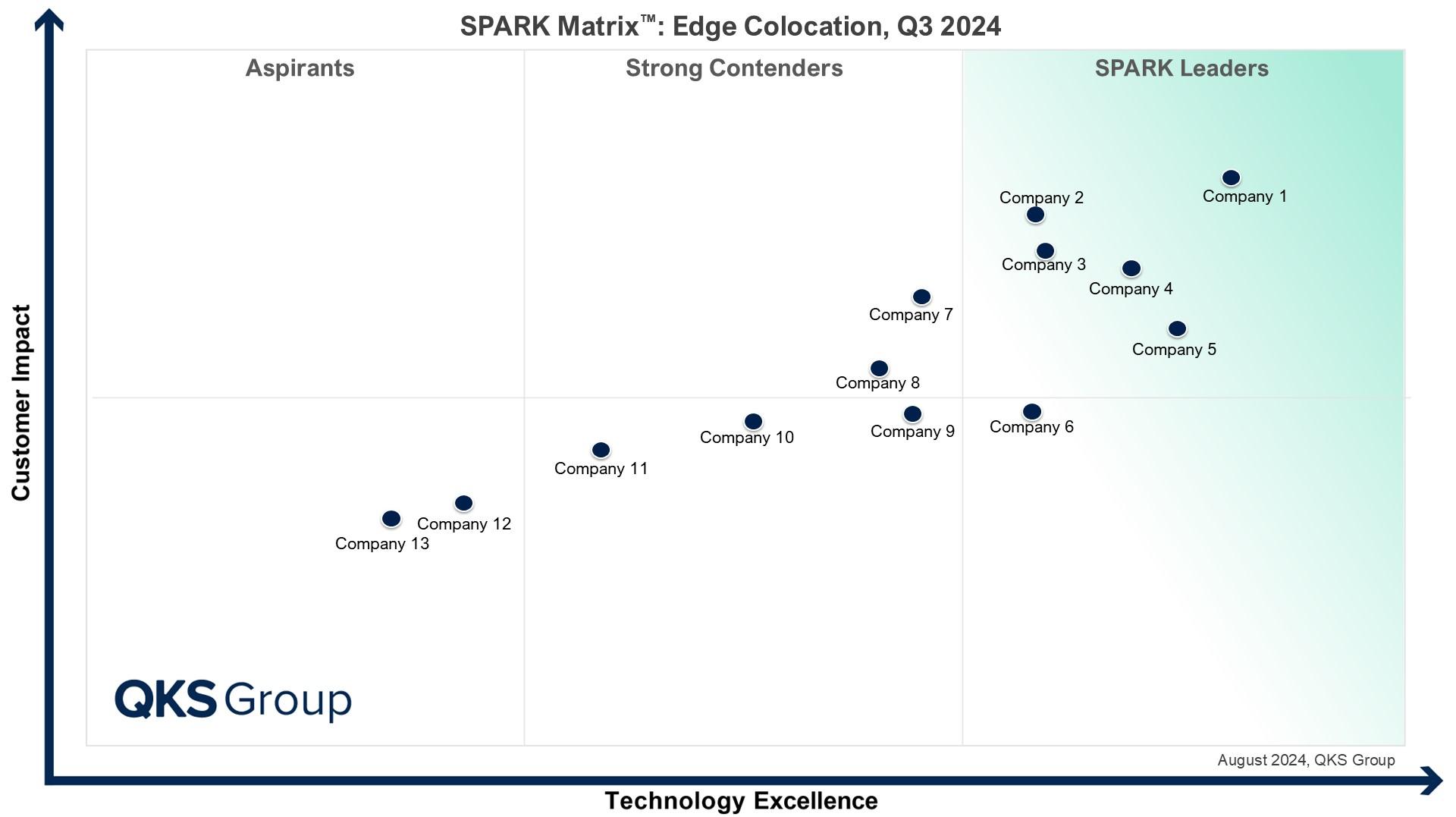
The research also includes a detailed competition analysis using the proprietary SPARK Matrix™, which evaluates vendors based on technology leadership and market impact.
The SPARK Matrix ranks and positions leading edge colocation vendors globally, including:
- 1623 Farnam
- 365 Data Centres
- AtlasEdge
- CoreSite
- DartPoints
- Digital Realty
- edge Centres
- EdgeConneX
- Equinix
- Flexential
- SBA Edge
- Switch
- Vapor IO
These vendors are building distributed infrastructure networks that enable enterprises to deploy latency-sensitive applications closer to users and devices.
Key Challenges Businesses Face
Despite its growing adoption, implementing edge infrastructure presents several challenges for organizations.
1. Distributed Infrastructure Management
Managing multiple edge locations across geographically dispersed markets can be complex. Organizations must ensure consistent performance, security, and maintenance across distributed facilities.
2. Network Connectivity and Integration
Edge infrastructure must seamlessly integrate with centralized cloud environments, enterprise networks, and end-user systems. Achieving reliable and high-speed connectivity across these environments requires advanced network architecture.
3. Data Security and Compliance
Edge environments process sensitive data closer to users and devices. Ensuring strong security frameworks and compliance with regional data regulations is critical for enterprise deployments.
4. Infrastructure Costs and Scalability
Deploying infrastructure across multiple edge locations can increase capital and operational costs if not managed efficiently. Organizations must balance performance requirements with cost optimization strategies.
5. Limited Expertise in Edge Architecture
Many enterprises are still developing expertise in designing and managing edge computing environments. Selecting the right infrastructure partners is essential for successful deployment.
Connect With Our Analyst: https://qksgroup.com/analyst-briefing?analystId=37&reportId=8067
Key Trends & Innovations
The edge colocation market is evolving rapidly as enterprises adopt modern technologies to support distributed computing environments.
1. AI and Real-Time Analytics at the Edge
Artificial intelligence and machine learning workloads increasingly require real-time data processing. Edge colocation facilities enable AI models to analyze data locally, reducing latency and improving response times.
2. 5G Network Expansion
The rollout of 5G networks is accelerating demand for edge infrastructure. 5G applications such as autonomous vehicles, smart cities, and immersive media require ultra-low latency computing capabilities.
3. Modular and Micro Data Centers
Vendors are deploying compact, modular edge facilities that can be rapidly installed in regional markets. These micro data centers provide flexible infrastructure that can scale as demand grows.
4. Hybrid Cloud and Edge Integration
Enterprises are integrating edge infrastructure with hybrid cloud environments to balance centralized computing with localized data processing.
5. Automation and Infrastructure Monitoring
Advanced automation tools and monitoring platforms enable organizations to manage distributed edge infrastructure more efficiently and ensure high availability.
These innovations are accelerating adoption of Edge Colocation infrastructure across industries.
Benefits & Business Impact
Edge colocation delivers significant operational and strategic benefits for enterprises adopting distributed computing models.
1. Ultra-Low Latency Performance
Processing data closer to users reduces network latency, enabling faster application performance and improved user experience.
2. Optimized Bandwidth Usage
By processing data locally, organizations reduce the need to transfer large volumes of data to centralized data centers, optimizing bandwidth consumption.
3. Improved Application Reliability
Edge infrastructure ensures that critical applications continue to operate even if connectivity to centralized data centers is disrupted.
4. Enhanced Data Sovereignty and Compliance
Edge deployments allow organizations to process and store data within specific geographic regions, helping them comply with regulatory requirements.
5. Scalable Infrastructure for Digital Innovation
By leveraging Edge Colocation, enterprises can rapidly deploy infrastructure in new markets, enabling innovation and expansion into emerging digital services.
Use Cases or Real-World Examples
Edge colocation supports a wide range of emerging digital applications across industries.
1. Smart Cities Infrastructure
Cities deploy edge infrastructure to process data from sensors, cameras, and traffic systems in real time, improving urban mobility and public safety.
2. Autonomous Vehicles and Mobility
Autonomous vehicles require real-time data processing for navigation and safety. Edge infrastructure supports ultra-fast decision-making for connected mobility systems.
3. Industrial IoT and Smart Manufacturing
Manufacturing companies use edge colocation to process machine data locally, enabling predictive maintenance and real-time operational analytics.
4. Media Streaming and Gaming
Content delivery platforms use edge infrastructure to reduce latency and deliver high-quality streaming experiences for users across geographic regions.
How Organizations Can Choose the Right Solution
Selecting the right edge colocation partner requires careful evaluation of infrastructure capabilities and vendor expertise.
Key factors organizations should consider include:
- Geographic Coverage
Enterprises should evaluate whether vendors offer edge facilities in strategic locations that align with their user base and operational footprint. - Network Connectivity and Ecosystem
Edge colocation providers should offer strong interconnection capabilities with telecom providers, cloud platforms, and enterprise networks. - Security and Compliance Capabilities
Robust security frameworks are essential for protecting sensitive data processed at edge locations. - Scalability and Modular Deployment
Organizations should assess whether vendors provide flexible infrastructure models that can scale as business needs evolve. - Vendor Innovation and Market Position
Tools such as the SPARK Matrix™ Edge Colocation analysis provide valuable insights into vendor capabilities, helping enterprises identify technology leaders in the market.
Future Outlook (2025–2028)
The edge colocation market is expected to grow rapidly as digital services increasingly require distributed infrastructure.
Key developments anticipated between 2025 and 2028 include:
- Expansion of edge data centers in regional and tier-two markets
- Increased integration between edge infrastructure and public cloud platforms
- Growing demand from AI-driven and IoT-based applications
- Acceleration of 5G-enabled services requiring ultra-low latency infrastructure
- Greater focus on sustainability and energy-efficient edge data centers
As organizations deploy more connected devices and real-time applications, Edge Colocation will become a foundational infrastructure layer for the digital economy.
Download Sample Report Here:https://qksgroup.com/download-sample-form/spark-matrix-edge-colocation-q3-2024-8067
Conclusion
Modern digital applications require infrastructure that can process data closer to users and devices while maintaining seamless integration with centralized cloud environments.
Edge colocation provides the distributed infrastructure needed to support real-time analytics, IoT deployments, AI workloads, and next-generation digital services. By reducing latency, optimizing bandwidth usage, and enabling localized computing, edge infrastructure helps organizations deliver faster and more reliable digital experiences.
As enterprises continue to expand digital operations across global markets, edge colocation will play a critical role in enabling scalable, resilient, and high-performance digital ecosystems.

 English
 Kiswahili
 French
 Spanish
 Portuguese
 Deutsch
 Turkish
 Dutch
Dutch
 Italiano
 Russian
 Romaian
 Portuguese (Brazil)
 Greek
Greek
