1. Understanding Chronic Inflammation
Inflammation is the body's natural defense mechanism. When you get a cut or infection, the immune system releases chemicals to fight the threat.
But imagine if your home alarm system kept ringing all day-- even when there's no danger. That constant noise would eventually damage the system itself.
This is exactly what happens with chronic inflammation.
Instead of protecting the body, long-term inflammation begins to harm tissues and organs. It can damage:
Blood vessels
Liver cells
Pancreatic cells
Fat tissues
Over time, this silent damage contributes to many diseases, including fatty liver, diabetes, heart disease, and obesity.
2. The Liver: Your Body's Chemical Factory
The liver is one of the most hardworking organs in the body. You can think of it as a 24/7 chemical processing plant.
It performs over 500 essential functions, including:
Filtering toxins from the blood
Processing nutrients from food
Storing vitamins and minerals
Producing bile for digestion
Regulating metabolism
When the liver becomes inflamed, these important functions start to slow down. That's when fat begins to accumulate inside liver cells.
3. What is Fatty Liver Disease?
Fatty liver disease occurs when excess fat builds up inside the liver.
Normally, the liver contains very little fat. But when fat makes up more than 5-- 10% of liver weight, it is considered fatty liver disease.
There are two main types:
1. Alcoholic Fatty Liver Disease
Caused by excessive alcohol consumption.
2. Non-Alcoholic Fatty Liver Disease (NAFLD)
Occurs in people who drink little or no alcohol and is strongly linked to obesity, diabetes, and metabolic syndrome.
NAFLD is now one of the most common liver diseases worldwide.
4. What is Type 2 Diabetes?
Type 2 diabetes occurs when the body can not properly use insulin, a hormone that regulates blood sugar.
In healthy individuals:
Insulin allows glucose to enter cells.
Cells use glucose for energy.
But in Type 2 diabetes, cells become resistant to insulin, causing glucose to remain in the bloodstream.
Over time, high blood sugar damages organs such as:
The liver
Kidneys
Heart
Eyes
Nerves
5. The Hidden Link Between Inflammation and Metabolic Disease
So how does inflammation connect fatty liver and diabetes?
The answer lies in metabolism.
Chronic inflammation interferes with the body's ability to regulate:
Fat storage
Blood sugar
Hormones
Energy production
Inflammatory chemicals released by immune cells can disrupt insulin signals and increase fat storage in the liver.
This creates a metabolic imbalance, which increases the risk of both fatty liver disease and Type 2 diabetes.
6. How Chronic Inflammation Causes Fatty Liver
Inflammation affects the liver in several ways.
First, it increases fat production in the liver.
Second, it reduces the liver's ability to burn fat.
Third, it damages liver cells, leading to scarring.
When these changes occur together, fat begins to accumulate inside liver cells.
Over time, fatty liver may progress to:
Non-Alcoholic Steatohepatitis (NASH)
Liver fibrosis
Liver cirrhosis
At this stage, liver damage may become severe and require advanced treatment.
7. How Inflammation Leads to Insulin Resistance
Insulin resistance is one of the main drivers of Type 2 diabetes.
Chronic inflammation releases substances called cytokines, which interfere with insulin signaling.
As a result:
Cells stop responding to insulin properly.
Blood sugar levels rise.
The pancreas produces more insulin.
Eventually, the pancreas becomes exhausted, leading to Type 2 diabetes.
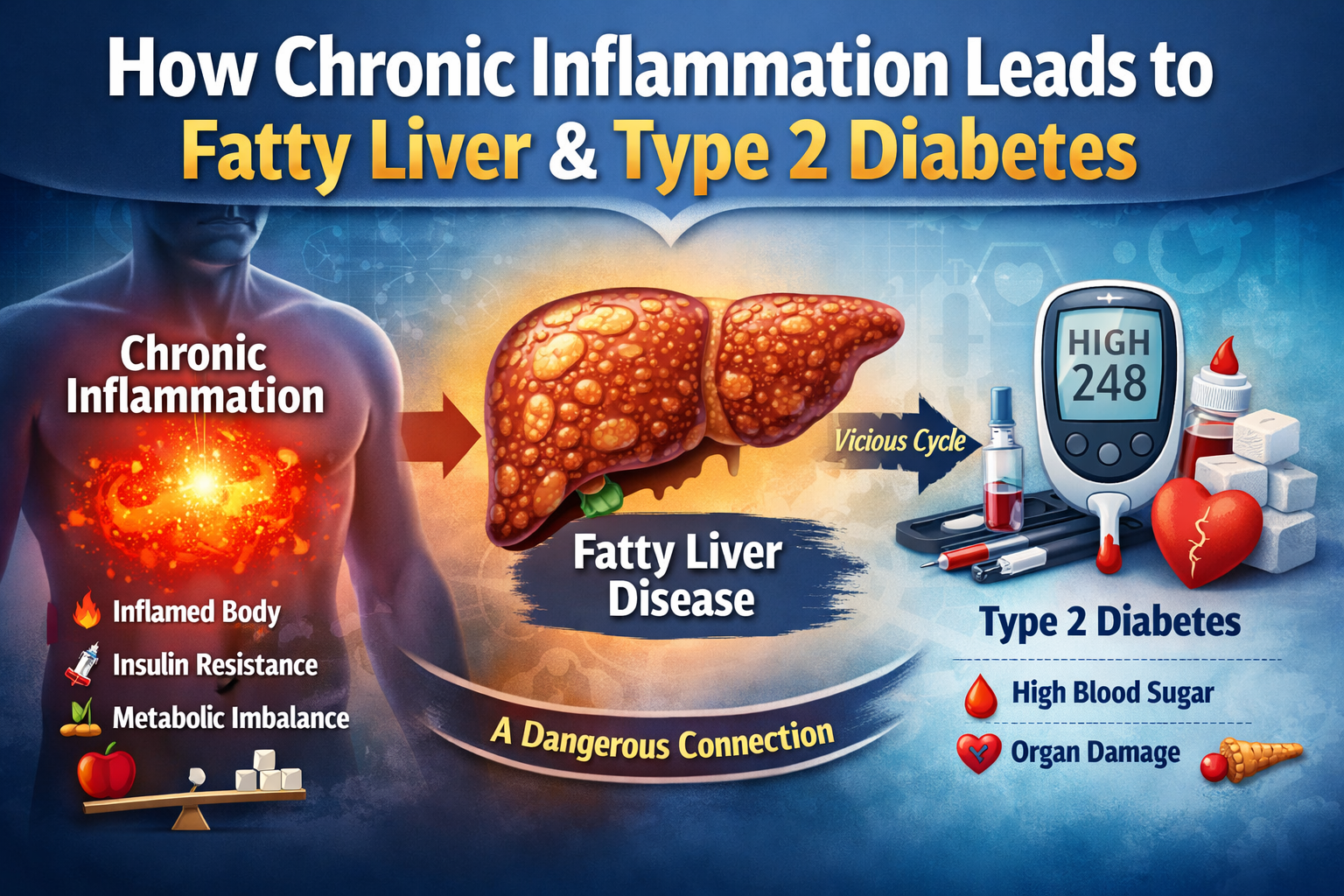
8. The Dangerous Cycle Between Fatty Liver and Diabetes
Fatty liver and diabetes create a vicious cycle.
Here's how it works:
Chronic inflammation causes insulin resistance.
Insulin resistance increases fat storage in the liver.
Fatty liver worsens insulin resistance.
Blood sugar levels rise further.
This cycle can continue for years without noticeable symptoms.
9. Risk Factors That Increase Chronic Inflammation
Several lifestyle and health factors contribute to chronic inflammation.
Common risk factors include:
Obesity
Unhealthy diet
Sedentary lifestyle
Smoking
Excess sugar intake
Chronic stress
Poor sleep
Processed foods and sugary beverages can especially trigger inflammatory responses in the body.
10. Warning Signs of Fatty Liver and Diabetes
One of the biggest challenges with fatty liver disease is that it often shows no symptoms in early stages.
However, as the disease progresses, some people may experience:
Fatigue
Abdominal discomfort
Unexplained weight gain
Darkened skin around the neck
Increased thirst
Frequent urination
Because symptoms are subtle, many people are diagnosed only during routine blood tests or ultrasound scans.
11. Why Early Detection Matters
Early diagnosis can prevent severe liver damage.
Doctors often detect fatty liver through:
Liver function tests
Ultrasound scans
FibroScan
MRI imaging
If detected early, fatty liver disease is often reversible with lifestyle changes.
12. Treatment Options for Fatty Liver and Diabetes
Treatment focuses on reducing inflammation and improving metabolism.
Doctors usually recommend:
Weight loss
Blood sugar control
Anti-inflammatory diet
Physical activity
Diabetes medications if needed
In many cases, losing just 7-- 10% of body weight can significantly improve liver health.
13. When Liver Damage Becomes Severe
In some individuals, fatty liver progresses to cirrhosis or liver failure.
At this stage, the liver becomes severely scarred and can not function properly.
Treatment options may include:
Advanced medications
Regular monitoring
Liver transplantation
In complex cases, consulting the best liver transplant surgeon in india can be critical for evaluating treatment options and improving survival outcomes.
14. Lifestyle Changes to Reduce Inflammation
The good news is that chronic inflammation can often be reduced naturally.
Key lifestyle strategies include:
1. Healthy Diet
Focus on:
Fruits and vegetables
Whole grains
Healthy fats
Lean proteins
Avoid:
Processed foods
Sugary drinks
Excess refined carbohydrates
2. Regular Exercise
Aim for at least 150 minutes of moderate exercise per week.
3. Maintain Healthy Weight
Even small weight loss can reduce inflammation.
4. Quality Sleep
Sleep helps regulate hormones and immune responses.
5. Stress Management
Practices like yoga, meditation, and deep breathing can reduce inflammation levels.
15. Protecting Your Liver for the Long Term
Your liver is incredibly resilient, but it needs care.
Simple habits like:
Eating balanced meals
Staying physically active
Avoiding excessive alcohol
Regular health checkups
can protect your liver for decades.
If liver disease progresses to advanced stages, seeking treatment from the best liver transplant surgeon in india ensures access to specialized expertise and life-saving care.
Conclusion
Chronic inflammation is like a slow-burning fire inside the body. At first, it may seem harmless. But over time, it silently damages important organs-- especially the liver and pancreas.
This hidden process can lead to fatty liver disease and Type 2 diabetes, two conditions that are increasingly common worldwide.
The encouraging news is that these diseases are often preventable and reversible in early stages. By adopting healthier lifestyle habits, maintaining a balanced diet, and staying physically active, you can reduce inflammation and protect your metabolic health.
Most importantly, regular health screenings and timely medical guidance can make all the difference in preventing long-term complications.
FAQs
1. Can chronic inflammation really cause fatty liver disease?
Yes. Chronic inflammation disrupts fat metabolism and causes fat to accumulate inside liver cells, which can lead to fatty liver disease.
2. Is fatty liver connected to Type 2 diabetes?
Yes. Fatty liver disease and Type 2 diabetes are closely linked because both are strongly associated with insulin resistance and chronic inflammation.
3. Can fatty liver be reversed naturally?
In many cases, early-stage fatty liver can be reversed with weight loss, healthy diet, regular exercise, and improved blood sugar control.
4. What foods reduce inflammation and protect the liver?
Foods that help reduce inflammation include:
Leafy greens
Berries
Nuts
Olive oil
Fatty fish rich in omega-3
5. When should someone see a liver specialist?
You should consult a liver specialist if blood tests show abnormal liver enzymes, imaging suggests fatty liver, or symptoms of advanced liver disease appear. In severe cases, consultation with the best liver transplant surgeon in india may be necessary.




 English
 Kiswahili
 Arabic
 French
 Spanish
 Portuguese
 Turkish
 Dutch
Dutch
 Italiano
 Russian
 Romaian
 Portuguese (Brazil)
 Greek
Greek
