


ACSR Conductor for Modern Power Transmission: High-Strength, Cost-Efficient Solution for Utility Networks
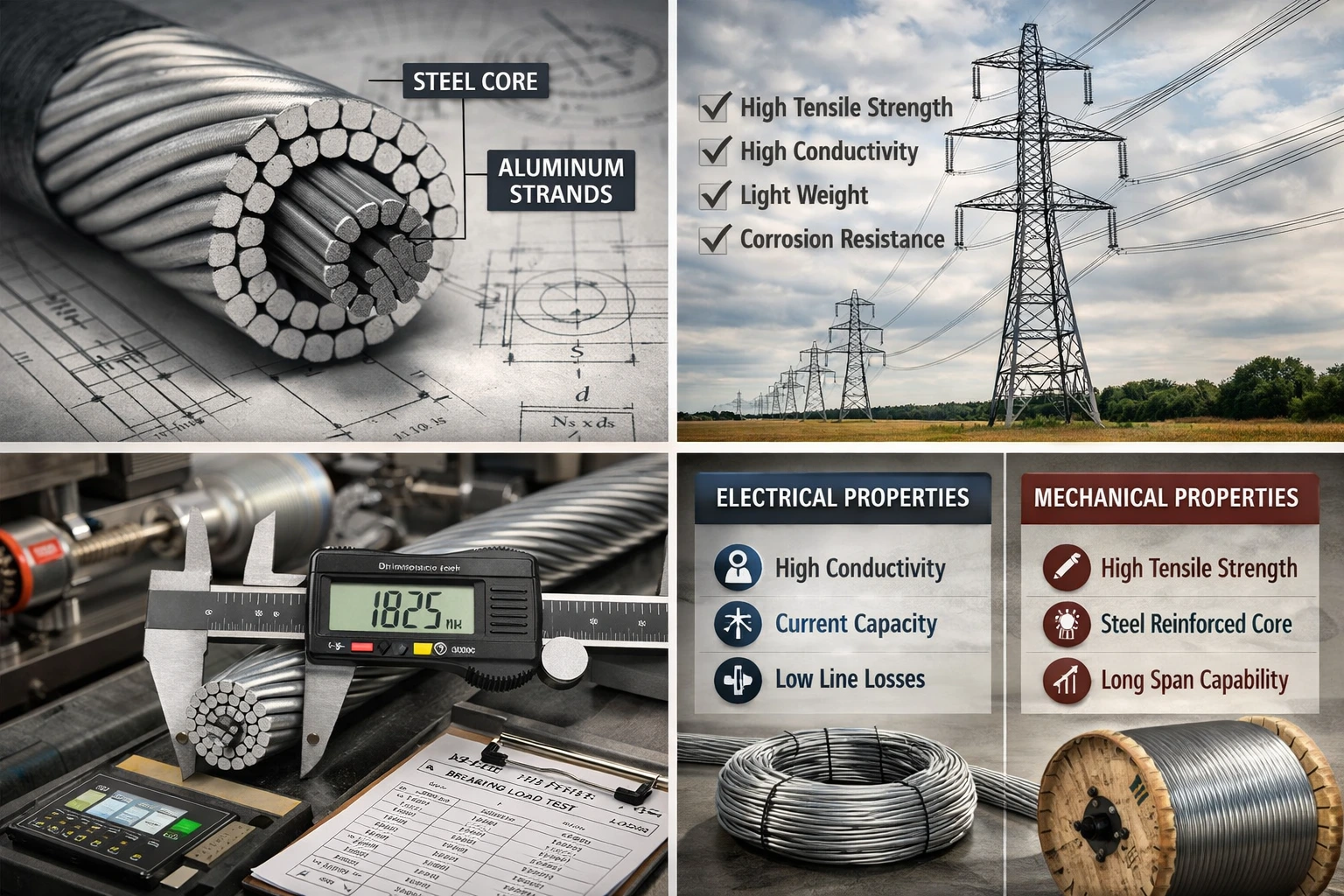
In today’s fast-growing transmission and distribution infrastructure, the acsr conductor remains one of the most trusted overhead line solutions for utilities, EPC contractors, and grid developers. Designed to combine high mechanical strength with reliable electrical performance, ACSR (Aluminum Conductor Steel Reinforced) plays a critical role in medium- to extra-high-voltage overhead transmission projects worldwide.
As a global manufacturer of overhead conductors and power cables, HNBF Power supplies engineered ACSR solutions for utility-scale projects, substations, and long-span transmission lines where durability, efficiency, and lifecycle cost matter most.
This guide explains how the acsr conductor works, how it is manufactured, and why it continues to be the preferred option for demanding power transmission environments.
What Is an ACSR Conductor?
An acsr conductor is a stranded overhead conductor consisting of:
-
An inner galvanized steel core that provides high tensile strength
-
One or more outer layers of hard-drawn aluminum wires responsible for current carrying
This hybrid construction allows the conductor to achieve a strong balance between mechanical performance and electrical efficiency, making it ideal for long spans, river crossings, mountainous routes, and high-load corridors.
Unlike all-aluminum conductors, ACSR is specifically engineered for situations where line tension, wind loading, ice accumulation, and thermal expansion are critical design constraints.
Key Engineering Advantages of ACSR Conductor
High Tensile Strength for Long Spans
The steel-reinforced core significantly increases tensile strength compared with AAC or AAAC. For transmission engineers, this means:
-
longer span lengths
-
reduced tower quantity
-
improved clearance margins
This translates directly into lower total project cost and easier route planning for new overhead lines.
Excellent Electrical Performance
Although the steel core supports mechanical loading, the outer aluminum layers carry most of the current. This structure provides:
-
stable conductivity
-
predictable thermal behavior
-
proven performance in standard and high-temperature operating conditions
For utility networks, this ensures consistent power delivery under varying climate and load profiles.
Superior Resistance to Environmental Stress
The acsr conductor performs reliably in:
-
high-wind zones
-
heavy ice and snow regions
-
coastal and industrial environments
Proper surface protection and controlled galvanization of the steel core significantly improve corrosion resistance and service life.
ACSR Conductor Manufacturing Process
Understanding the acsr conductor manufacturing process is essential for procurement teams and utility engineers when evaluating suppliers.
1. Steel Core Preparation
High-strength steel wire rods are drawn, stranded, and hot-dip galvanized to ensure long-term corrosion protection and mechanical stability.
2. Aluminum Wire Drawing
High-purity aluminum rods are drawn into precise diameters to meet electrical and mechanical specifications.
3. Layered Stranding Process
The steel core is positioned at the center, and aluminum wires are helically stranded around it in one or multiple layers. Controlled stranding geometry ensures:
-
uniform stress distribution
-
consistent conductor diameter
-
stable electrical characteristics
4. Final Quality Inspection
Each production batch undergoes:
-
tensile strength testing
-
DC resistance measurement
-
dimensional verification
-
surface and lay-length inspection
At HNBF Power, these steps are integrated into a standardized production workflow to ensure stable supply quality for utility projects.
Where ACSR Conductor Is Commonly Used
The acsr conductor is widely selected for:
-
overhead transmission lines
-
regional and national grid interconnections
-
utility distribution feeders with long spans
-
industrial power infrastructure projects
Typical voltage applications range from medium voltage distribution to high-voltage and extra-high-voltage transmission systems.
ACSR vs AAC and AAAC – Practical Selection for Engineers
ACSR vs AAC
AAC offers better conductivity and lighter weight, but it lacks the mechanical strength required for long-span and heavy-load routes. ACSR is preferred where structural safety and sag control are critical.
ACSR vs AAAC
AAAC improves corrosion resistance and strength compared to AAC, but still cannot match the tensile performance of steel-reinforced conductors. In mountainous or high-wind regions, ACSR remains the safer engineering choice.
Why Utilities and EPC Contractors Choose HNBF Power
For global utility and EPC buyers, conductor sourcing is not only about unit price. It is about:
-
manufacturing consistency
-
traceable raw materials
-
project-specific engineering support
-
stable delivery schedules
HNBF Power supplies a complete range of overhead conductors including ACSR, AAC, AAAC, ABC cable, LV power cable, and concentric cable. The company supports customized conductor designs based on:
-
span length and mechanical loading
-
regional climate conditions
-
project voltage class
-
utility technical specifications
This engineering-driven approach helps utilities reduce construction risk while maintaining long-term network reliability.
Installation and Lifecycle Considerations
Proper installation of acsr conductor directly affects network performance. Key practices include:
-
accurate stringing tension control
-
correct sag-tension calculations
-
appropriate vibration dampers and hardware
-
compatible fittings and clamps
When correctly designed and installed, ACSR offers an exceptionally long service life with predictable maintenance requirements, making it suitable for large-scale grid reinforcement and expansion programs.
Frequently Asked Questions (FAQs)
1. What makes ACSR conductor suitable for long-distance transmission lines?
The steel core provides high tensile strength, allowing longer spans and reduced sag, while the aluminum layers maintain stable current-carrying performance.
2. Is ACSR conductor suitable for high-temperature operation?
Yes. Standard ACSR designs can operate safely within defined thermal limits. For higher operating temperatures, project-specific conductor designs can be supplied.
3. How does corrosion protection work in ACSR conductors?
The steel core is typically hot-dip galvanized, and aluminum naturally forms a protective oxide layer, helping improve long-term environmental resistance.
4. Can ACSR conductor be customized for specific projects?
Yes. Conductor size, stranding configuration, aluminum-to-steel ratio, and mechanical ratings can be customized to meet utility and EPC technical requirements.
5. What documents should procurement teams request when sourcing ACSR?
Key documents include mechanical and electrical test reports, dimensional inspection records, material traceability, and production quality certifications.
Partner with HNBF Power for Your ACSR Conductor Projects
If you are planning new overhead transmission lines or upgrading existing utility networks, choosing the right acsr conductor supplier is critical for long-term system performance.
Contact HNBF Power today to discuss your project requirements and receive customized ACSR conductor solutions engineered for your grid, environment, and budget.

 English
 Kiswahili
 Arabic
 French
 Spanish
 Portuguese
 Deutsch
 Turkish
 Dutch
Dutch
 Italiano
 Russian
 Portuguese (Brazil)
 Greek
Greek
