


Voice Biometrics and Face Liveness Detection: The Future of Secure Digital Identity
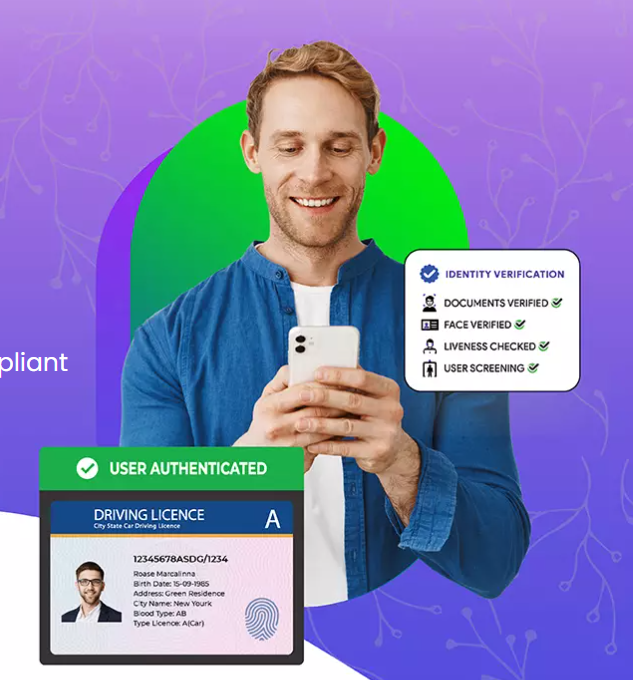
In today’s digital-first world, businesses are under constant pressure to deliver fast onboarding while keeping fraud risks under control. Traditional authentication methods like passwords and OTPs are no longer enough. This is where voice biometrics and face liveness detection are transforming how organizations verify and protect users online.
These two technologies together create a powerful, frictionless, and highly secure identity verification experience for industries such as fintech, telecom, healthcare, and online marketplaces.
What Is Voice Biometrics?
Voice biometrics is a biometric authentication technology that identifies or verifies a person based on their unique voice characteristics. Every individual has a distinct vocal pattern created by their vocal tract, pitch, tone, and speaking style.
Unlike traditional voice recognition systems that only convert speech to text, voice biometrics focuses on who is speaking, not just what is being said. During registration, a user’s voice is captured and converted into a digital voiceprint. Later, this voiceprint is matched in real time during login or customer support calls.
Voice biometrics offers several advantages:
-
Password-free authentication
-
Faster customer onboarding and login
-
Reduced risk of account takeover and social engineering attacks
-
Seamless user experience for mobile and remote users
It is especially useful for call centers, mobile banking apps, and remote customer verification.
What Is Face Liveness Detection?
Face liveness detection is a security layer used in facial biometric systems to ensure that the person in front of the camera is physically present and not a fake attempt using photos, videos, or deepfake content.
This technology analyzes facial movements, depth information, lighting reflections, and micro-expressions to determine whether the face is real and live. Advanced liveness checks can also detect screen replays, printed photos, and 3D masks.
Key benefits of face liveness detection include:
-
Strong protection against spoofing and deepfake attacks
-
Higher accuracy in facial authentication
-
Compliance with modern biometric security standards
-
Better trust during remote identity verification
Organizations and regulators, including National Institute of Standards and Technology, emphasize the importance of liveness detection for secure biometric deployments.
Why Combine Voice Biometrics and Face Liveness Detection?
Individually, both technologies are powerful. When combined, they create a multi-layered biometric security model that significantly reduces identity fraud.
Voice biometrics verifies the speaker’s identity, while face liveness detection confirms the physical presence of the user. This dual verification approach ensures that even if one biometric factor is compromised, the second layer protects the system.
For industries facing strict KYC and AML requirements, this combination improves:
-
Digital onboarding success rates
-
Fraud detection accuracy
-
Customer trust and regulatory compliance
Business Use Cases Across Industries
Voice biometrics and face liveness detection are widely adopted in:
-
Digital banking and fintech onboarding
-
Telecom SIM activation and eKYC
-
Healthcare patient identity verification
-
Online platforms and gig economy marketplaces
Modern identity verification platforms such as Accura Scan integrate both voice-based authentication and advanced facial liveness checks to help businesses automate verification while maintaining high security and user convenience.
Conclusion
As identity fraud becomes more sophisticated, relying on a single authentication factor is no longer sufficient. Voice biometrics and face liveness detection together offer a future-ready biometric security framework that balances strong protection with a smooth user experience.
By adopting these technologies, organizations can improve digital trust, reduce operational costs, and deliver faster, safer, and more reliable identity verification for customers worldwide.

 English
 Arabic
 French
 Spanish
 Portuguese
 Deutsch
 Turkish
 Dutch
Dutch
 Italiano
 Russian
 Romaian
 Portuguese (Brazil)
 Greek
Greek
