


How Cutting Systems Manage High-Elasticity Materials
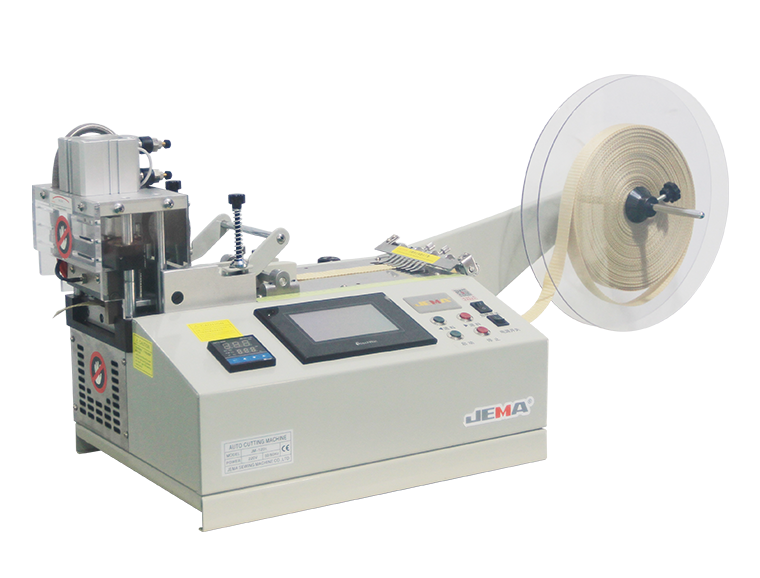
Introduction to Deformation Risks
When working with highly elastic or extremely flexible materials, cutting accuracy often becomes more challenging due to the intrinsic properties of the substrates. Such materials tend to stretch, compress, bend, or rebound when subjected to external forces such as tension, blade pressure, or feeding friction. Understanding whether the Elastic Cutting Machine can maintain stable cutting performance under these conditions requires a close look at the material-machine interaction, the mechanical control strategies, and the methods used to stabilize soft substrates during processing. The presence of deformation is not solely determined by the material itself but also by how well the machine is designed to counteract these tendencies.
Influence of Material Elasticity on Cutting Behavior
High-elasticity materials like spandex blends, rubber films, latex sheets, and soft foam often react to cutting forces in unpredictable ways. Instead of presenting a rigid cutting surface, they may deform laterally or longitudinally the moment the blade makes contact. This can result in skewed edges, inconsistent widths, or waviness along the cut line. Flexible materials exhibit similar behavior, especially when thin and lightweight. Without proper stabilization, these substrates may bunch up, ripple, or shift. The cutting force itself is not the main issue; rather, the material tends to move away from the blade that leads to inaccuracy or visible distortion.
Role of Tension Control and Material Support
To minimize deformation, the tension applied to the material must be precisely regulated. Too much tension leads to elongation, causing cuts that become shorter or narrower once the material relaxes. Insufficient tension allows the material to flutter or buckle, producing irregularities. Machines engineered for soft-material applications often incorporate active tension systems featuring servo-driven unwinders, feedback sensors, and load-control rollers. These components ensure that the material remains stable yet not overstretched. Additionally, full-surface support structures such as vacuum tables, pressure plates, or broad contact rollers help flatten the substrate, preventing it from lifting or curling during cutting. These mechanical strategies significantly improve the reliability of the Elastic Cutting Machine when processing high-elasticity materials.
Cutting Method and Blade Dynamics
The choice of cutting mechanism plays an important role in deformation control. Rotary blades, ultrasonic cutters, or cold-knife systems each exert different levels of force on the material. Rotary systems typically generate smoother motion and reduce pulling forces, making them suitable for soft substrates. Ultrasonic cutting introduces high-frequency vibration that minimizes drag, leading to cleaner edges with less distortion. Fixed-blade systems, while simpler, may cause the material to stretch if contact pressure is not finely managed. The cutting speed also influences deformation: high speeds can reduce time for the material to react, while overly slow speeds may cause dragging. Advanced machines often integrate adaptive pressure control that automatically adjusts blade force to maintain clean cuts across varying material densities.
Alignment and Feed Stability
When dealing with materials prone to deformation, maintaining consistent alignment is crucial. Flexible rolls may drift laterally if not guided properly, resulting in asymmetrical cuts. Precision edge-tracking sensors, centering devices, and multi-point guiding rails help keep the substrate on a fixed path. Smooth feeding mechanisms with synchronized rollers also prevent sudden tension spikes that could stretch the material. These systems reduce friction and eliminate micro-shifts that might otherwise cause warping. Such stability is essential for the Elastic Cutting Machine to handle ultra-soft materials accurately.
The Importance of Pre-Cut Conditioning
Not all deformation control occurs on the machine itself. In some cases, soft or highly elastic materials benefit from pre-conditioning, such as cooling, partial stiffening, or surface treatment. Cooling can reduce elasticity temporarily, allowing the blade to cut with greater precision. Light coatings can add rigidity without affecting material function. These steps are especially useful for extremely stretchy substrates that are difficult to manage even with mechanical control systems. Although not always necessary, such conditioning can be a powerful supplementary strategy for achieving consistent results.
Cutting length (mm): 20-9999
Maximum cutting width (mm): 10-50
Cutting speed (p/min): 90
Voltage (v): 110/220
Frequency (Hz): 50/60
Rated power (kW): 0.26
Package size L × W ×H)(mm ): 560 × 420 × 405
Weight (kg): 24/29
Packing rate (sets): 1

 English
 Kiswahili
 Arabic
 Spanish
 Portuguese
 Deutsch
 Turkish
 Dutch
Dutch
 Italiano
 Russian
 Romaian
 Portuguese (Brazil)
 Greek
Greek
