


Color Mixer Machine Precision and Consistency Explained
Introduction to Color Mixing Accuracy
Color mixing accuracy is a critical factor in industrial applications, including plastics, paints, textiles, and food processing. Consistent color output ensures product quality, reduces waste, and strengthens brand reputation. While a Color Mixer Machine provides the mechanical means to combine pigments, powders, or liquids, achieving high precision depends on several interrelated factors, such as the type of mixer, operating parameters, and material characteristics. Understanding how these variables affect mixing accuracy is essential for manufacturers who aim to maintain uniform color quality.
Factors Affecting Color Mixer Machine Precision
Several elements influence the precision of a Color Mixer Machine. The design and configuration of mixing blades, the speed of rotation, and the duration of mixing play a significant role in achieving uniform color. Additionally, the consistency and particle size of the raw materials determine how well they blend. Uneven particle distribution or differing densities can result in color inconsistencies if the mixer is not properly calibrated. Therefore, careful selection of input materials and proper adjustment of machine settings are necessary to ensure accurate color blending.
Importance of Mixing Time and Speed
The mixing time and speed directly impact the uniformity of the final product. Insufficient mixing may leave streaks or uneven coloration, while excessive mixing can cause overgrinding or particle degradation, which may affect the product’s appearance and quality. Optimizing the rotation speed and processing time according to the material properties is essential for high precision. Advanced Color Mixer Machines often feature programmable controls that allow operators to set precise parameters, improving consistency and reducing human error.
Role of Machine Calibration
Calibration is a critical aspect of maintaining the accuracy of a Color Mixer Machine. Regular calibration ensures that the machine operates within specified tolerances, preventing variations in output color. This process may include checking the alignment of blades, verifying rotation speed, and adjusting batch size relative to the mixer’s capacity. Proper calibration minimizes deviations and ensures repeatability across multiple batches, which is particularly important in large-scale production where even minor color variations can lead to product rejection.
Impact of Material Characteristics
The physical and chemical properties of the materials being mixed also affect precision. Powders with different particle sizes, liquids with varying viscosities, or pigments with different densities require specialized handling and mixing strategies. Some machines include features such as variable-speed agitators or segmented chambers to accommodate diverse material properties. By understanding the characteristics of the input materials, operators can optimize the mixing process to achieve more accurate color results.
Quality Control and Monitoring
To maintain high precision, quality control measures must be integrated into the production process. Sampling and measuring color consistency after mixing helps identify deviations early, allowing for corrective actions. Many modern Color Mixer Machines come equipped with sensors or automated feedback systems that monitor mixing performance in real-time. This technology enhances precision, reduces waste, and ensures that the final product consistently meets color specifications.
The precision of a Color Mixer Machine is influenced by multiple factors, including machine design, operating parameters, material properties, and calibration practices. Optimizing mixing time, speed, and blade configuration, along with careful selection of materials, is essential for achieving uniform color output. Incorporating quality control and monitoring systems further ensures consistent performance across batches. By focusing on these aspects, manufacturers can enhance the accuracy of color mixing, reduce material waste, and deliver products that meet the highest standards of quality.
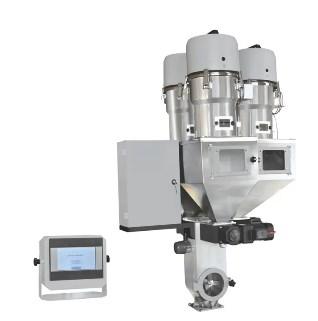
The blending screw is vertically mounted for fast and even mixing.
Suitable for all kinds of plastic materials and color masterbatches.
Barrel and mixing screws are made of stainless steel, both of which are rust-free and easy to clean.
Equipped with power protection device to ensure operator's safety and no damage to machine.
The drying model is optional.

 English
 Kiswahili
 Arabic
 French
 Spanish
 Portuguese
 Deutsch
 Turkish
 Dutch
Dutch
 Italiano
 Russian
 Portuguese (Brazil)
 Greek
Greek
