


Adjusting Spray Height of Water Plowing Aerator
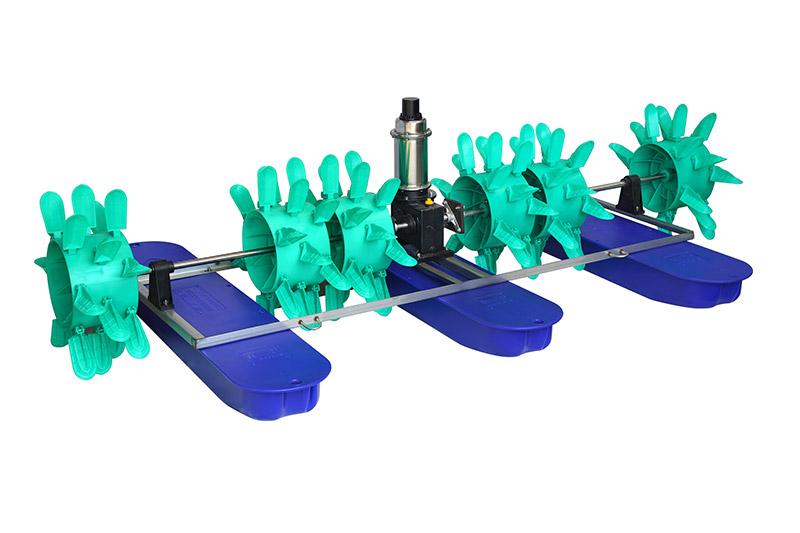
Understanding Spray Height and Coverage Principles
The Water Plowing Aerator is designed to create directional water flow combined with surface splashing to improve oxygen transfer and circulation. The spray height and coverage range directly influence aeration efficiency, mixing performance, and energy consumption. Proper adjustment ensures that the system meets pond-specific requirements without causing unnecessary power waste or shoreline erosion. Understanding the mechanical and hydraulic principles behind splash formation is the first step in effective regulation.
Motor Power and Rotational Speed Adjustment
One of the primary factors affecting spray height is motor output and impeller rotational speed. Increasing rotational speed enhances centrifugal force, allowing water to be projected higher and farther. Some models allow speed regulation through variable frequency drives, enabling operators to fine-tune performance based on seasonal needs. Higher speeds generally increase splash height and surface turbulence, expanding the oxygen exchange area. However, excessive speed may reduce energy efficiency and cause mechanical wear, so adjustments should be made within the manufacturer's specifications.
Impeller Angle and Blade Design
Impeller geometry significantly influences how water is lifted and dispersed. Blade angle determines whether water is directed more vertically or horizontally. A steeper blade angle produces higher spray patterns, while a flatter angle increases horizontal thrust and extends surface coverage. Some systems allow blade angle modification or interchangeable impeller components to match different pond depths and surface areas. Adjusting blade configuration provides a mechanical way to balance splash height with directional circulation.
Installation Depth and Positioning
The immersion depth of the unit also affects splash performance. When installed slightly deeper, more water mass is drawn into the impeller, potentially reducing vertical spray but enhancing horizontal plowing flow. Conversely, shallower installation can increase visible splash height but may limit deeper water mixing. Proper positioning within the pond is equally important. Placing the aerator near the center maximizes symmetrical coverage, while strategic off-center placement can create directed circulation patterns in elongated ponds.
Influence of Water Conditions
Water level, density, and environmental conditions influence actual spray results. During high water levels, splash height may appear reduced because of increased resistance. Wind direction can also alter spray distribution, especially in open ponds. Operators should evaluate these external factors when adjusting settings to ensure consistent coverage. Seasonal adjustments are common, as summer oxygen demand may require stronger surface agitation compared to cooler months.
Balancing Efficiency and Safety
While maximizing coverage can improve oxygen transfer, excessive splash height may contribute to bank erosion or equipment instability in smaller ponds. The goal is to achieve uniform water movement across the target area rather than focusing solely on dramatic spray visuals. Monitoring dissolved oxygen levels and observing circulation patterns provides practical feedback for determining whether adjustments are effective.
Conclusion
Spray height and coverage range are controlled through motor speed, impeller design, installation depth, and environmental considerations. By carefully adjusting these variables, operators can optimize aeration efficiency while maintaining energy balance and structural safety. Proper configuration ensures that plowing-style aeration systems deliver stable circulation and reliable oxygen distribution across various pond conditions.

 English
 Kiswahili
 Arabic
 Spanish
 Portuguese
 Deutsch
 Turkish
 Dutch
Dutch
 Italiano
 Russian
 Romaian
 Portuguese (Brazil)
 Greek
Greek
