


How to Estimate Roof Pitch?
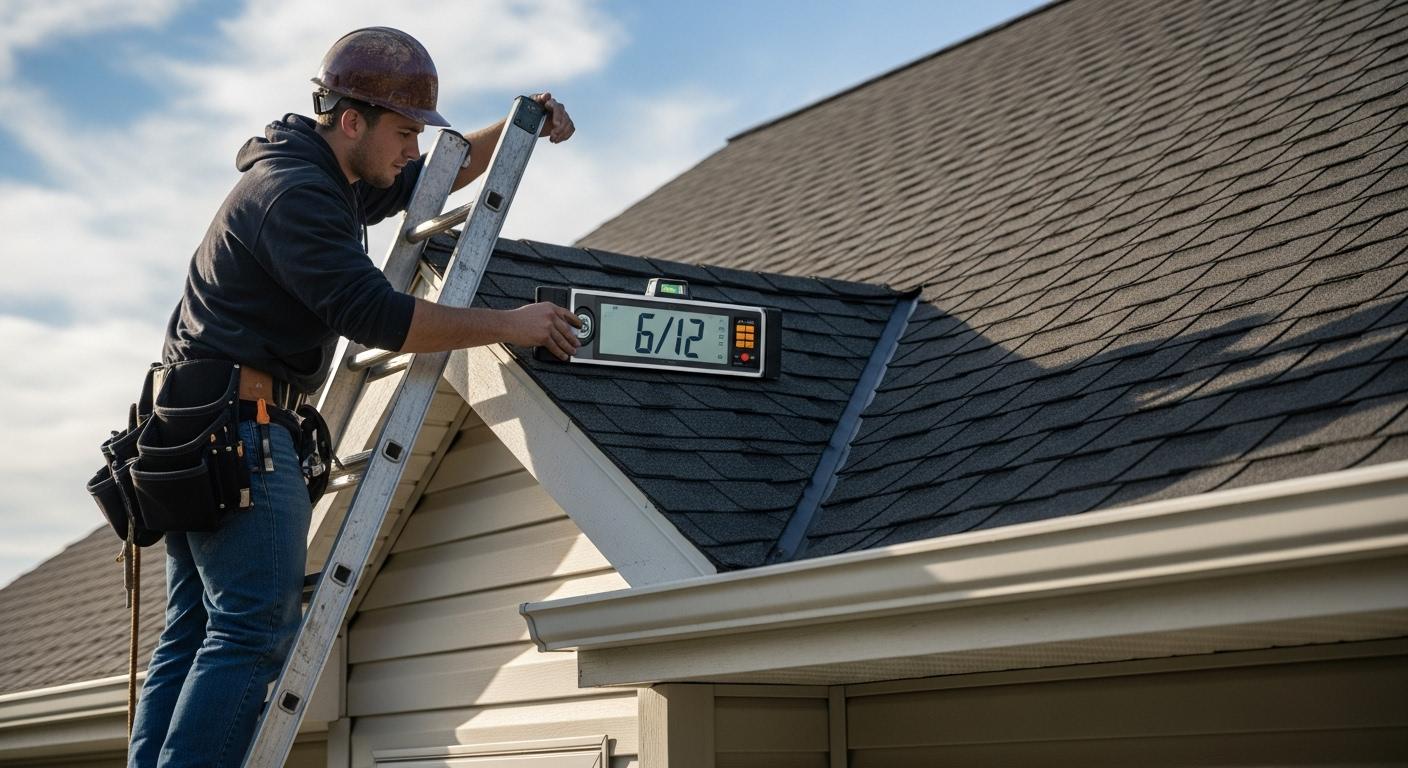
Estimate roof pitch by measuring the vertical rise of the roof in inches for every 12 inches of horizontal run. You can do this from the attic, right on the roof, or even use simple tools or digital apps if you are on the ground.
Roof pitch may be regarded as a minor technical detail; nevertheless, in American homes, it is a major factor in determining roofing costs, material selection, drainage efficiency, and even compliance with local building codes. Whether you are renovating your house or a contractor measuring, a knowledge of roof pitch allows you to make wiser choices even before starting work.
During construction or renovation works, roof pitch is an important variable for deriving material quantities and ensuring precise estimates. Accurate measurement of the pitch allows a roofing estimating company to perform detailed takeoff services that reflect real site conditions rather than relying on rough assumptions. When the pitch is taken correctly at the very beginning, it helps save time and money while also preventing delays, material shortages, and the inconvenience of redoing work later in the project.
What Is Roof Pitch?
Roof pitch is a term that represents the inclination of a roof. In the United States, it is conveyed as a ratio that depicts the vertical rise in inches of the roof for every 12 inches of horizontal distance.
Understanding Rise and Run
The “rise” of a roof is the vertical height above the ground, and the “run” is the horizontal distance. As in US construction, the run is a fixed 12 inches, and the roof pitch can be denoted as X/12.
If a roof pitch is 6/12, it means that the roof goes up by 6 inches for every 12 inches of horizontal run.
Roof Pitch vs Roof Slope
Even though the two words are frequently used interchangeably, they are different. Roof pitch is represented as a ratio (such as 4/12), whereas roof slope is depicted as a percentage. Pitch is the terminology most familiar to American roofers, inspectors, and building departments.
Why Roof Pitch Matters in US Homes
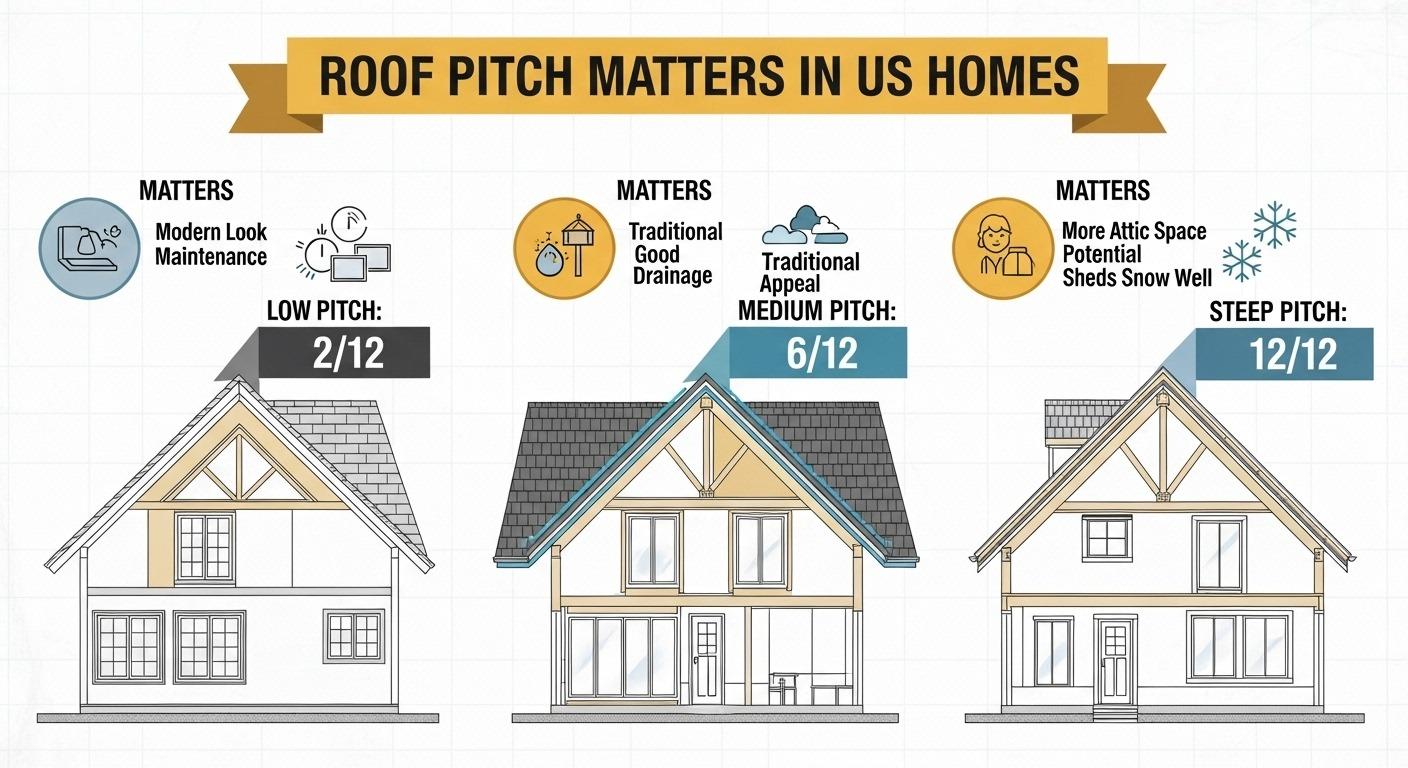
A roof pitch is not just a figure; it greatly determines the performance of a roof over time as well as the cost of its construction or replacement.
Weather Performance Across the US
In the northern states, steep roofs are helpful in quickly getting rid of snow as well as lowering ice dam formation. In the areas where it rains a lot, the right pitch will lead to efficient drainage of water, thus saving the shingles and the underlayment from getting damaged. Pitch is a factor in resisting wind uplift as well as for fastening requirements in high-wind areas.
Impact on Roofing Materials
Different roofing materials have different requirements regarding the minimum pitch of the roof to work properly. If a material is installed on a roof with an insufficient pitch, it may result in leaks, the warranty being void, etc.
Cost, Labor, and Safety
Steep roofs are more time-consuming, labor-intensive, and require more safety equipment, which results in higher installation costs and contractor bids being affected. Knowing the accurate pitch beforehand will help in keeping the construction or replacement free from unexpected issues.
Common Roof Pitch Ranges in the United States
The table below shows typical roof pitch ranges and how they are commonly used in US residential construction:
|
Roof Pitch |
Classification |
Common Usage |
|
2/12 – 3/12 |
Low-slope |
Porches, additions, modern homes |
|
4/12 – 6/12 |
Conventional |
Most US residential houses |
|
7/12 – 9/12 |
Moderately steep |
Snow-prone or traditional designs |
|
10/12 and above |
Steep-slope |
Historic homes, A-frame designs |
Most houses in America generally have 4/12 to 6/12 roofs because such pitches offer the right balance of drainage, cost, and ease of installation.
How to Estimate Roof Pitch from the Attic
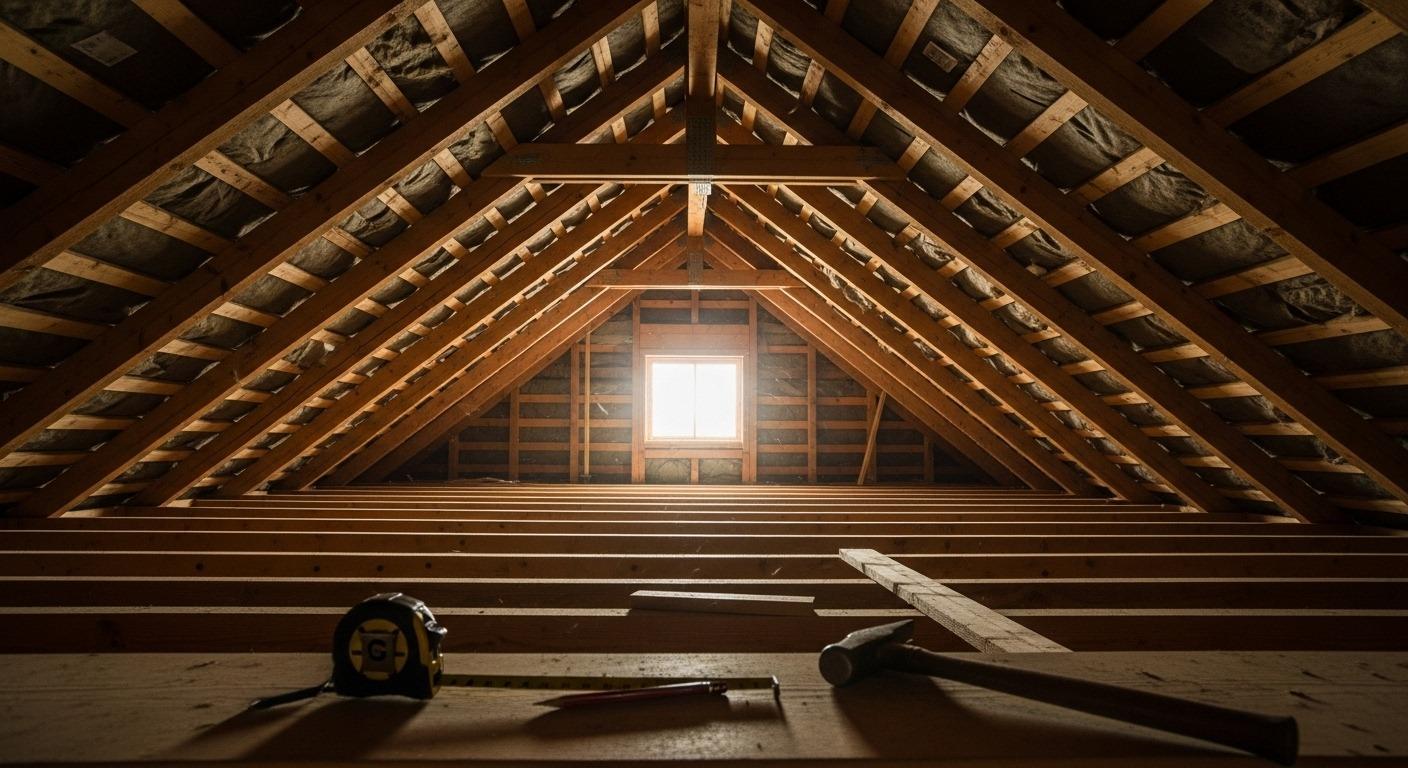
One of the best, as well as the safest, ways for a homeowner to determine the pitch of a roof is to measure the attic.
Without stepping out of the attic, take a horizontal level and prop it against the underside of the roof rafters. Use the level to mark 12 inches from one end. At the 12-inch mark, record the vertical distance from the level to the rafter. This measurement is the rise of your roof.
In the case the rise measures 5 inches, then your roof pitch is 5/12.
This method does not require you to climb the roof and is a dandy way of working for inspectors and estimators in the US.
How to Estimate Roof Pitch on the Roof Surface
Getting measurements straight from the roof surface offers not just precise but infallible results. Disasters in the form of accidents can be avoided only with one thing, namely, the correct safety equipment.
You place the level on the roof surface and take the vertical rise measurement at the point dividing the level into 12 inches. Professional roofers usually go for this method as they already wear their fall protection kit.
Because a steep roof is a major hazard for falls, the advice most of the time is that homeowners stay away from this indoor space if they are not really into it or do not have the skills, unless it is a matter of being under professionals.
Estimating Roof Pitch from the Ground
Estimating from the ground is a helpful method when you simply cannot or should not be going up on the roof.
Contractors use pitch gauges, angle finders, or apps on their smartphones that calculate the pitch through the photos taken. Even though these methods are less accurate than getting the measurements themselves, they are good enough for the purposes of planning and rough checking of the roof.
Using Digital Tools and Apps
Techmaxxes mean that it is no longer necessary to spend hours estimating roof pitch.
Most roofing apps give the user the possibility to point their phone at the roof, and the app will give the pitch instantly. Online calculators also convert rise and run into pitch ratios, slope percentages, or degrees.
Such instruments have become an integral part of the US roofing industry, especially when it comes to field estimates and documentation at the drop of a hat.
Converting Roof Pitch to Degrees
Structural analysis, solar panels installation, or simply architectural design are cases when obviously the pitch of a roof is also required in degrees.
The table below shows common US roof pitches and their approximate degree equivalents:
|
Roof Pitch |
Degrees |
|
3/12 |
14.0° |
|
4/12 |
18.4° |
|
6/12 |
26.6° |
|
8/12 |
33.7° |
|
10/12 |
40.0° |
Degrees in roofing are probably less in use for standard housing projects, but they play a crucial role in engineering and energy-related applications. Understanding roof angles accurately supports structural performance and thermal efficiency, which is especially important for reliable residential estimating where precise takeoff services are required to calculate materials, costs, and design requirements correctly.
Roof Pitch and Material Compatibility
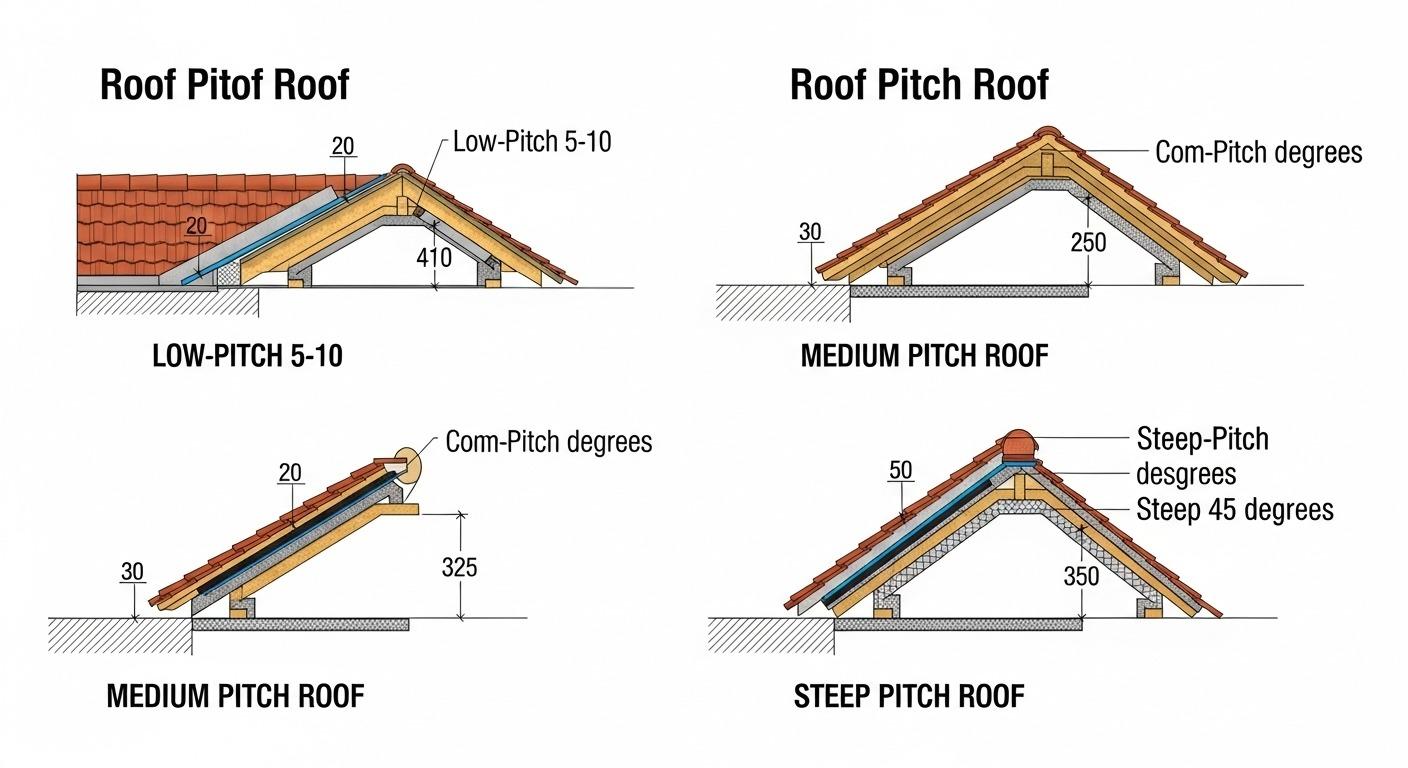
Roof pitch is the main factor that determines the materials that can be safely and effectively used.
For example, asphalt shingles require at least a pitch of 2/12, whereas metal roofing can be installed on lower slopes but with proper sealing. Generally, clay tiles and slate need steeper pitches to ensure good drainage.
Knowing the pitch beforehand while choosing the materials can save you from installation headaches and product performance problems in the long run.
Building Codes and Roof Pitch in the US
Depending on the roofing material and the climatic conditions, local building codes may require a minimum pitch.
Most of the US jurisdictions adhere to the International Residential Code (IRC) guidelines, but there are always local amendments that may apply. For instance, the permit applications regularly require the pitch of the roof to be documented, especially for new buildings or major roof removals.
Estimating the pitch correctly not only helps in compliance but also cuts the time of getting approval.
Common Mistakes When Estimating Roof Pitch
One common mistake is measuring for a length of the run that is less than 12 inches, thus getting an incorrect ratio. Another problem is measuring on uneven surfaces or on warped rafters.
Also, most of the time, visual guessing without instruments may end up with inaccurate estimates, especially in the case of complex roof designs with multiple slopes.
When to Hire a Professional
Should a roof be extremely steep, have several intersecting planes, or be involved in an insurance or legal claim, a professional measurement is highly advised.
Roofing contractors, estimators, and inspectors are equipped with the tools and know-how to verify pitch accurately and safely.
Final Thoughts
Estimating roof pitch is essentially the first step for anyone involved in home ownership, contracting, and estimation in the United States. It dictates the selection of materials, labor costs, safety plans, and adherence to regulations. A roof pitch can be measured accurately without taking any unnecessary risks just by using simple tools and the correct method.
Whether you are going to do a repair, replacement, or the whole renovation, having a grasp on roof pitch will inevitably make better decisions and a less complicated execution of the work, starting with the very first measurement.
FAQs
What is the most common roof pitch in the US?
The roof pitch of most of the American homes is between 4/12 and 6/12.
Can I estimate roof pitch without climbing the roof?
Yes, you can do a measurement in the attic or estimate the ground with the help of tools or apps.
Why does roof pitch affect roofing cost?
More labor, safety equipment, and time are needed for steeper roofs, so the total cost rises.
Do I need a roof pitch for a roofing permit?
In most jurisdictions in the US, pitch is necessary for permits and material approval.
Is the roof pitch the same for all sides of a roof?
Not necessarily. A complicated roof can have different pitches, which have to be measured separately.

 English
 Kiswahili
 Arabic
 French
 Spanish
 Portuguese
 Deutsch
 Turkish
 Dutch
Dutch
 Italiano
 Russian
 Romaian
 Portuguese (Brazil)
