


How Can Advanced Flocculants Solve Tailings Treatment Challenges?
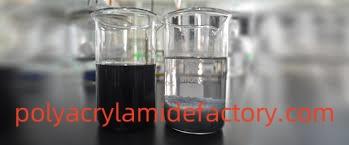
In the mineral processing industry, managing tailings – particularly fine particle tailings – is one of the most significant environmental challenges. Traditional flocculants are often employed to aggregate and settle fine particles in tailings ponds. However, despite their widespread use, these conventional flocculants face several challenges in effectively treating fine particle tailings.
The Nature of Fine Particle Tailings
Fine particle tailings are typically generated in large volumes during mineral processing. These fine particles, often clay-sized, have a high surface area relative to their mass, making them more challenging to treat than coarser particles. The particles are also often hydrophilic, which means they readily absorb water, making the flocculation process more difficult. As a result, traditional flocculants often struggle to agglomerate and settle these fine particles effectively.
Furthermore, the presence of various contaminants such as heavy metals and chemicals in the tailings can interfere with the performance of conventional flocculants. These impurities can alter the surface charge of the particles, reducing the efficiency of the flocculation process.
Ineffectiveness of Traditional Flocculants
Traditional flocculants, which are typically based on nonionic or anionic polymers, often fail to provide the desired level of aggregation when treating fine particle tailings. These flocculants are less effective at binding the particles together, resulting in poor sedimentation rates and inefficient dewatering. The result is that the tailings remain suspended in water, causing higher water content in the final tailings deposit and posing long-term storage challenges.
Moreover, traditional flocculants may require larger doses to achieve satisfactory results, which can be economically inefficient and environmentally unsustainable. High flocculant dosages can also lead to excessive residual chemicals in the treated water, which requires further treatment before it can be safely discharged.
Environmental and Operational Challenges
The use of traditional flocculants in fine particle tailings treatment can present several environmental and operational concerns. One of the key issues is the excessive sludge generation, which creates additional waste disposal challenges. Moreover, the disposal of water containing residual chemicals can result in contamination of surrounding ecosystems if not properly managed.
Another operational challenge is the variability of the tailings material. Fine particle tailings often exhibit inconsistent characteristics depending on the ore being processed and the methods used, making it difficult for a single flocculant formulation to address all types of fine tailings effectively. This variability demands the use of a more specialized flocculant that can handle diverse tailings conditions.
The Solution: Advanced mineral processing flocculant
To overcome the limitations of traditional flocculants, the mineral processing industry is increasingly turning to more advanced polymer-based solutions. These specialized mineral processing flocculants are designed to interact more effectively with fine particle tailings. By optimizing the molecular structure of the flocculant, manufacturers can improve its ability to aggregate fine particles, enhance dewatering efficiency, and reduce the volume of sludge produced.
At Polyacrylamidefactory, we offer advanced mineral processing flocculants that are specifically designed to handle the challenges of fine particle tailings. Our products are engineered to provide better flocculation performance, ensuring that fine particles are efficiently aggregated and settled. This results in clearer water and reduced tailings volumes, addressing both environmental and operational concerns.
For more information about how our mineral processing flocculants can improve your tailings management process, visit: https://www.polyacrylamidefactory.com/news/industry-news/polyacrylamidefactory-news-on-mineral-processing-flocculants.html

 English
 Kiswahili
 Arabic
 French
 Spanish
 Portuguese
 Turkish
 Dutch
Dutch
 Italiano
 Russian
 Romaian
 Portuguese (Brazil)
 Greek
Greek
