


Seeing the Unseen: An Introduction to the Global Infrared Detector Industry
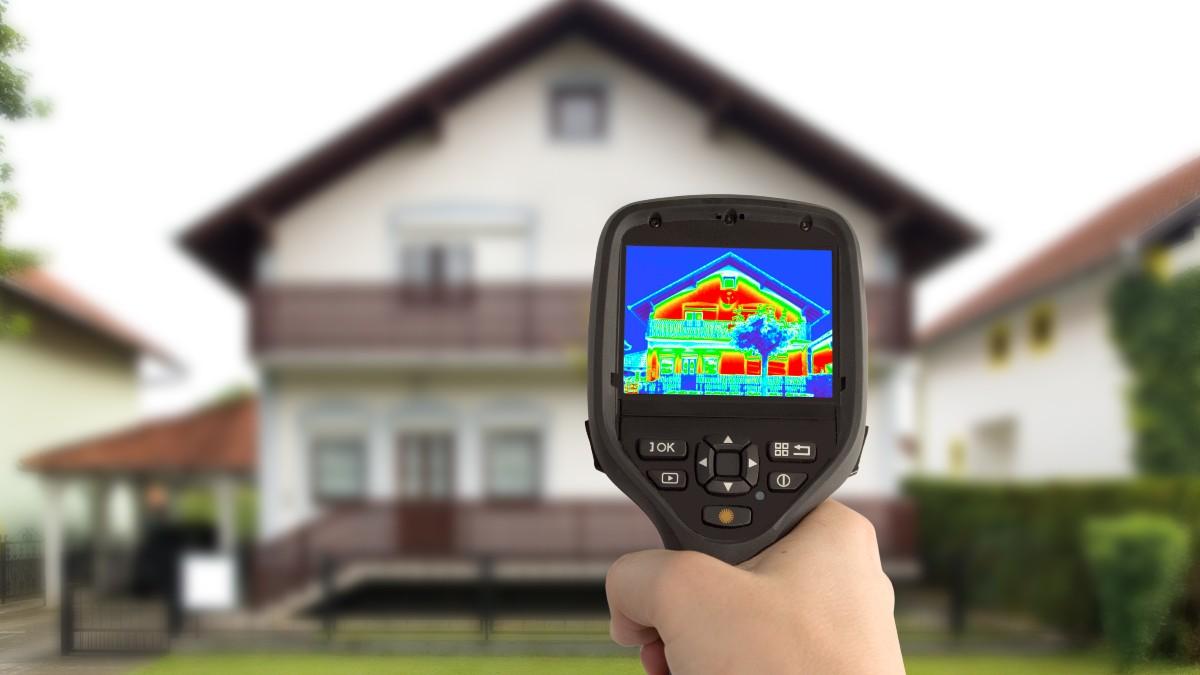
In a world increasingly driven by data and sensing, the ability to perceive what is invisible to the human eye has become a critical technological advantage. This is the domain of the fascinating and strategically vital Infrared Detector industry, a sector dedicated to the design and manufacturing of sensors that can detect infrared (IR) radiation. All objects with a temperature above absolute zero emit thermal energy in the form of IR radiation, which is outside the spectrum of visible light. An infrared detector is a specialized transducer that converts this invisible radiant energy into a measurable electrical signal. This signal can then be processed to create a "thermogram," or thermal image, which visually represents the temperature differences of a scene. This capability to "see heat" has unlocked a vast array of applications, from giving soldiers the ability to see in complete darkness and helping firefighters find people in smoke-filled rooms, to enabling preventative maintenance on industrial machinery and providing non-contact temperature screening. As the technology becomes smaller, cheaper, and more powerful, it is moving beyond its traditional military and industrial niches and into the mainstream, becoming a cornerstone of modern sensing technology.
The infrared detector industry is broadly segmented based on two fundamental operating principles: cooled and uncooled detectors. Cooled detectors are photon detectors that are cryogenically cooled to extremely low temperatures (often around 77 Kelvin or -196°C). This cooling is necessary to reduce the thermal "noise" within the sensor itself, which dramatically increases its sensitivity and allows it to detect very subtle temperature differences from great distances. Common materials for cooled detectors include Mercury Cadmium Telluride (MCT) and Indium Antimonide (InSb). Due to their extreme sensitivity and fast response times, cooled detectors are the technology of choice for high-performance, long-range applications, such as military targeting and reconnaissance systems, high-end scientific research, and gas leak detection. However, the need for a cryogenic cooler makes these systems larger, heavier, more complex, and significantly more expensive, limiting their use to applications where maximum performance is non-negotiable. The cooler itself is a miniature mechanical refrigerator that consumes power and has a limited lifespan, adding to the system's operational cost and complexity.
In stark contrast, uncooled detectors operate at or near room temperature, a revolutionary development that has democratized thermal imaging. The most common type of uncooled detector is the microbolometer. A microbolometer is a tiny resistor made from a material (like Vanadium Oxide or amorphous silicon) whose electrical resistance changes significantly with temperature. When IR radiation strikes the microbolometer, it heats up, its resistance changes, and this change is measured by a readout integrated circuit (ROIC) to create a pixel in a thermal image. Because they do not require a cryogenic cooler, uncooled detector systems are dramatically smaller, lighter, less power-hungry, and far less expensive to manufacture. This has opened up a massive range of commercial and consumer applications that were previously impossible. Uncooled detectors are the core technology inside handheld thermal cameras for electricians, security cameras for perimeter monitoring, motion sensors in smart buildings, and the thermal imaging modules that are now being integrated into smartphones and other consumer devices. The ongoing innovation in this segment is focused on shrinking the pixel size and improving sensitivity to close the performance gap with their cooled counterparts.
Ultimately, the infrared detector is the heart of any thermal imaging system, but it is part of a larger ecosystem of technologies. The detector array itself is bonded to a Readout Integrated Circuit (ROIC), a specialized silicon chip that reads the signal from each individual pixel and converts it into a digital format. This detector-ROIC assembly is then housed in a vacuum-sealed package to protect it from the environment and improve its thermal performance. To become a functional camera, this "core" must be paired with specialized optics—lenses made from materials like Germanium or Chalcogenide glass that are transparent to infrared radiation—and sophisticated image processing software. This software is crucial for performing non-uniformity correction (NUC) to ensure a clear image, applying color palettes to the thermal data to make it easier to interpret, and running advanced analytics, such as automatic temperature alarms or object detection algorithms. The industry, therefore, is not just about the detector itself but about the entire technology stack that transforms invisible heat into actionable intelligence.
Top Trending Reports:

 English
 Kiswahili
 Arabic
 French
 Spanish
 Portuguese
 Deutsch
 Turkish
 Italiano
 Russian
 Romaian
 Portuguese (Brazil)
 Greek
Greek
