


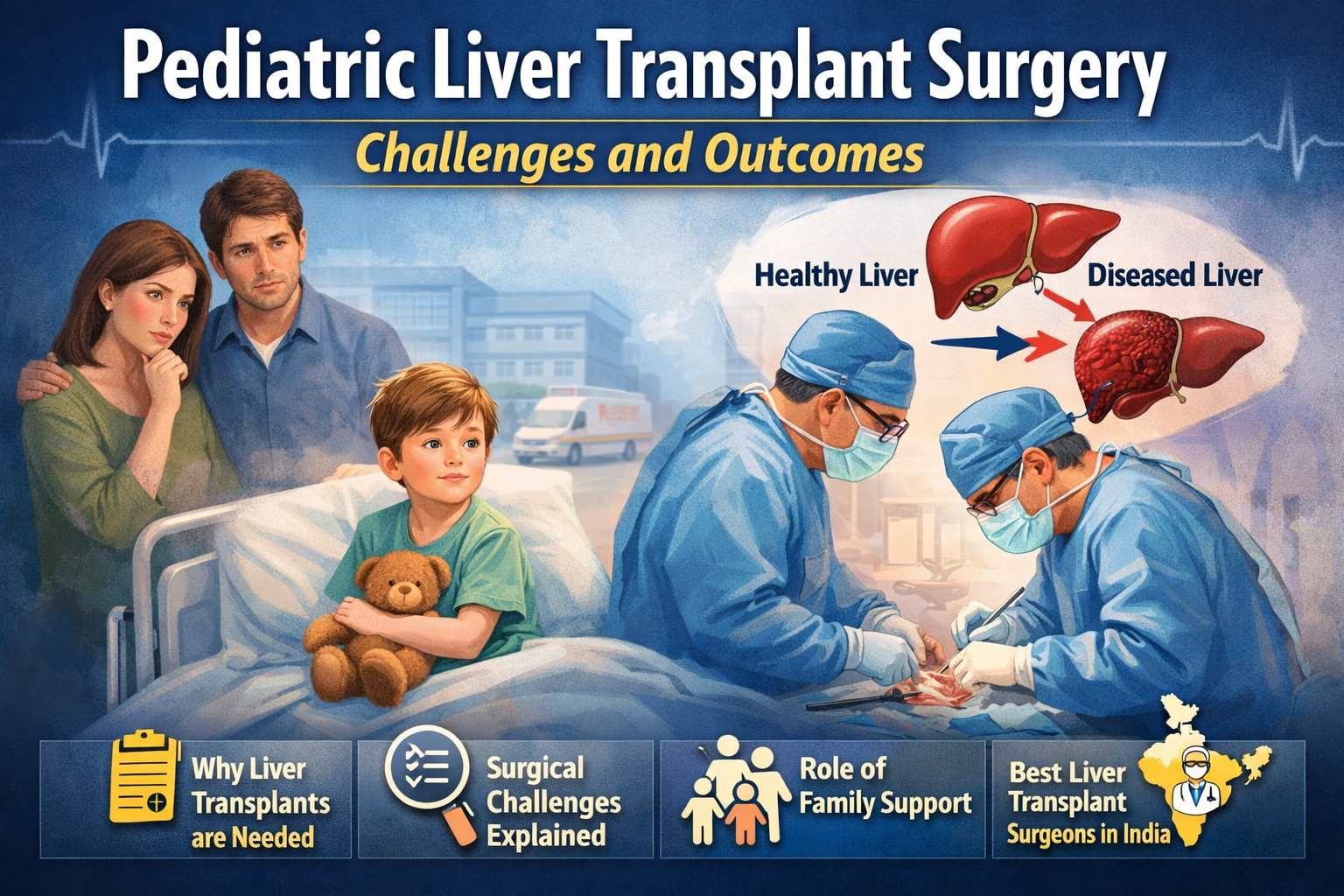
. What is Pediatric Liver Transplant Surgery?
A pediatric liver transplant is a surgical procedure where a damaged or failing liver in a child is replaced with a healthy liver from a donor.
Unlike adults, children require special care because their bodies are still growing. Surgeons must carefully match size, blood group, and medical condition.
Think of it like replacing a tiny engine in a delicate machine—you can’t just swap it out; everything must fit perfectly.
2. Why Do Children Need Liver Transplants?
Children may need a liver transplant due to several reasons, including:
-
Biliary atresia (most common cause)
-
Genetic liver diseases
-
Acute liver failure
-
Metabolic disorders
-
Liver tumors
Sometimes, these conditions are present at birth, while others develop later. Early diagnosis plays a crucial role in improving outcomes.
3. Types of Pediatric Liver Transplants
Living Donor Liver Transplant
A portion of the liver is donated by a healthy adult (often a parent).
Deceased Donor Liver Transplant
The liver comes from a donor who has passed away.
Split Liver Transplant
One donor liver is divided and transplanted into two recipients.
Fun fact: The liver is the only organ that can regenerate itself—like a superhero healing after battle!
4. Pre-Transplant Evaluation Process
Before surgery, doctors conduct detailed tests:
-
Blood tests
-
Imaging scans
-
Nutritional assessment
-
Psychological evaluation
This step ensures the child is ready for surgery and identifies any risks beforehand.
5. Challenges in Pediatric Liver Transplant
Let’s talk about the real hurdles.
Medical Challenges
-
Small blood vessels make surgery complex
-
Risk of infections
-
Organ rejection
Donor Availability
Finding a suitable donor is often difficult.
Financial Burden
Transplant surgery can be expensive, especially for many families in India.
Emotional Stress
Parents often experience anxiety, fear, and uncertainty.
6. Surgical Procedure Explained
The surgery typically takes 8–12 hours and involves:
-
Removing the diseased liver
-
Implanting the new liver
-
Connecting blood vessels and bile ducts
It’s a highly specialized procedure performed by experienced teams, often led by the best liver transplant surgeon in india.
7. Role of Parents and Family
Parents are not just caregivers—they are the child’s biggest support system.
They help with:
-
Medication schedules
-
Emotional comfort
-
Monitoring symptoms
Their involvement directly impacts recovery.
8. Post-Transplant Care in Children
Recovery doesn’t end after surgery—it’s just the beginning.
Key Aspects of Care
-
Lifelong medications (immunosuppressants)
-
Regular follow-ups
-
Balanced nutrition
-
Infection prevention
Consistency is the key here.
9. Risks and Complications
Like any major surgery, risks exist:
-
Organ rejection
-
Infections
-
Bleeding or clotting issues
-
Bile duct complications
But with modern medical care, many of these risks are manageable.
10. Success Rates and Outcomes
Here’s the encouraging part.
-
Success rates in India: 85–95%
-
Most children lead normal, healthy lives
-
Growth and development improve post-surgery
Advancements in technology and skilled surgeons have made outcomes more positive than ever.
11. Long-Term Life After Transplant
Children can:
-
Go to school
-
Play sports
-
Live a near-normal life
However, they must:
-
Take medications regularly
-
Avoid infections
-
Maintain healthy habits
It’s like having a second chance—and making the most of it.
12. Cost and Accessibility in India
The cost of pediatric liver transplant in India ranges between:
-
₹15 lakhs to ₹30 lakhs
India has become a global hub due to:
-
Affordable treatment
-
Skilled doctors
-
Advanced hospitals
13. Choosing the Right Surgeon
This is one of the most important decisions.
What to Look For:
-
Experience in pediatric cases
-
Success rates
-
Hospital infrastructure
-
Patient reviews
Choosing the best liver transplant surgeon in india can significantly impact outcomes.
14. Emotional and Psychological Impact
Let’s not ignore this part.
Children may feel:
-
Fear
-
Confusion
-
Anxiety
Parents may experience:
-
Stress
-
Financial pressure
-
Emotional exhaustion
Counseling and support groups can help families cope better.
15. Future of Pediatric Liver Transplant
The future looks promising:
-
Improved surgical techniques
-
Better medications with fewer side effects
-
Artificial liver support systems
-
Increased awareness and organ donation
We’re moving toward safer and more accessible treatments.
Conclusion
Pediatric liver transplant surgery is truly a life-saving miracle—but it comes with its own set of challenges. From finding a donor to managing post-surgery care, every step requires careful planning, emotional strength, and expert medical guidance.
The good news? With the availability of advanced healthcare and access to the best liver transplant surgeon in india, children today have a much brighter future than ever before.
If you or someone you know is going through this journey, remember—you’re not alone. With the right support and care, hope is always within reach.
FAQs
1. What is the success rate of pediatric liver transplant in India?
The success rate ranges between 85% to 95%, depending on the child’s condition and medical care.
2. How long does a child live after a liver transplant?
Many children live a normal and long life, often into adulthood, with proper care.
3. Is liver transplant safe for children?
Yes, when performed by experienced specialists, it is considered safe with high success rates.
4. How long is recovery after pediatric liver transplant?
Initial recovery takes 4–6 weeks, but full recovery may take several months.
5. How do I find the best liver transplant surgeon in India?
Look for experienced surgeons with strong success rates, good hospital facilities, and positive patient reviews.

 English
 Kiswahili
 Arabic
 French
 Portuguese
 Deutsch
 Turkish
 Dutch
Dutch
 Italiano
 Russian
 Romaian
 Portuguese (Brazil)
 Greek
Greek
