


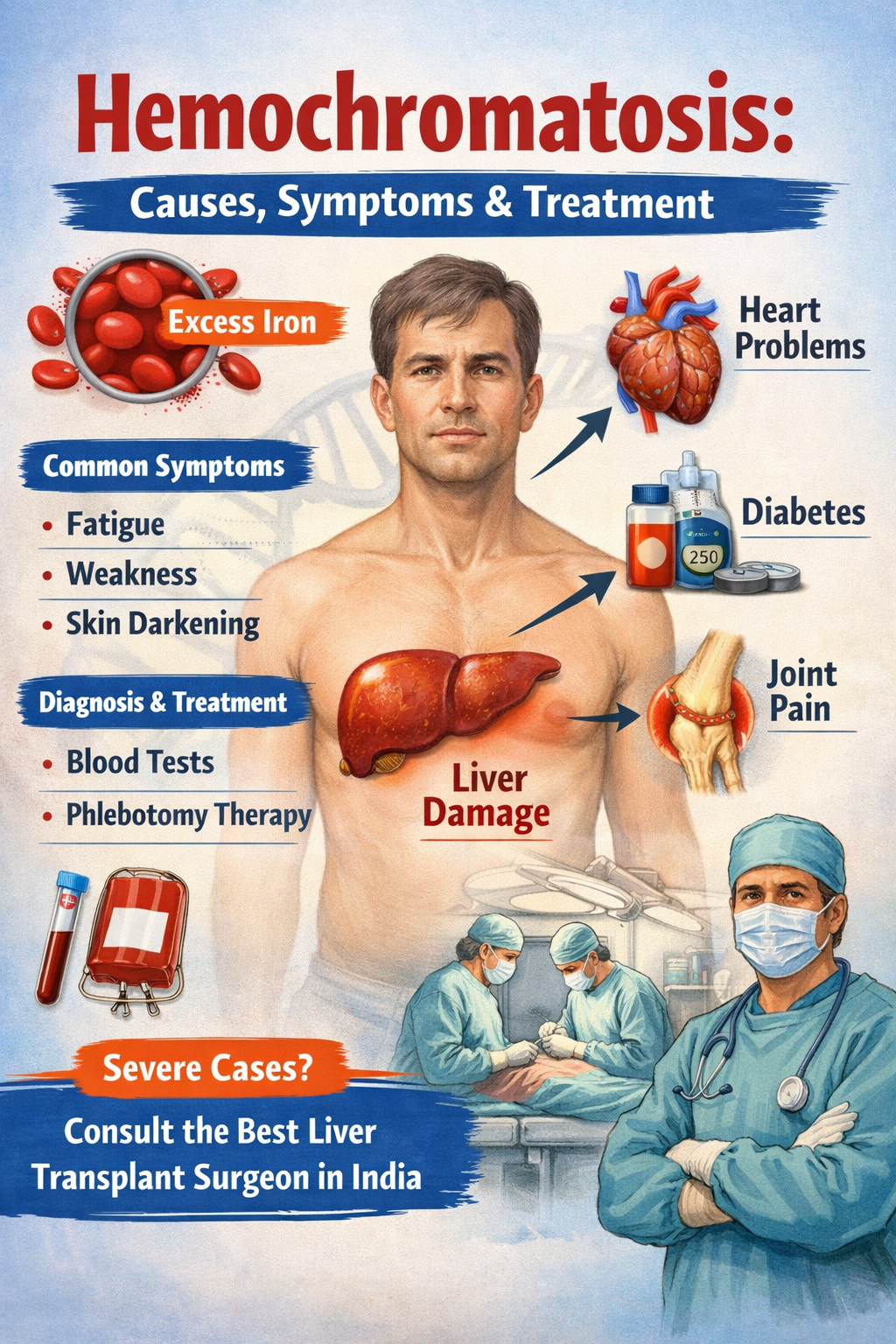
. What is Hemochromatosis?
Hemochromatosis is a condition where the body absorbs too much iron from food. Normally, your body regulates iron levels carefully. But in this disorder, that control system doesn't work properly.
Over time, excess iron gets stored in organs like:
Liver
Heart
Pancreas
Joints
This iron buildup can lead to serious problems, especially liver disease.
2. Types of Hemochromatosis
Primary Hemochromatosis (Hereditary).
This is a genetic condition. It runs in families and is caused by mutations in certain genes.
Secondary Hemochromatosis.
This develops due to other conditions like:
Repeated blood transfusions.
Chronic liver disease.
Certain anemias.
Primary hemochromatosis is more common than most people realize.
3. Why Does Iron Build Up in the Body?
Your body doesn't have a natural way to remove excess iron. So when absorption increases, iron keeps accumulating.
In hereditary hemochromatosis, a gene mutation makes your body think it needs more iron-- even when it doesn't.
It's like a faulty thermostat in an air conditioner. Even when the room is cool enough, it keeps running.
4. Common Symptoms You Shouldn't Ignore.
One tricky thing about hemochromatosis? Symptoms appear slowly.
Early signs may include:
Fatigue.
Joint pain.
Weakness.
Weight loss.
Later symptoms:
Liver enlargement.
Diabetes.
Skin darkening.
Heart issues.
Many people ignore early signs, thinking it's just stress or aging.
5. How Hemochromatosis Affects the Liver.
The liver is usually the first organ to suffer.
Iron Overload in the Liver Can Cause:
Fatty liver.
Liver inflammation.
Liver fibrosis.
Cirrhosis.
Liver cancer.
If not treated in time, severe damage may lead to liver failure. In advanced cases, consulting the best liver transplant surgeon in india becomes crucial to explore life-saving options.
6. Other Organs That Can Be Damaged.
Hemochromatosis doesn't stop at the liver.
Heart.
Irregular heartbeat.
Heart failure.
Pancreas.
Diabetes (sometimes called "bronze diabetes").
Joints.
Arthritis.
Hormonal Glands.
Sexual dysfunction.
Infertility.
Iron overload can truly affect the whole body.
7. Who is at Risk?
You may be at higher risk if:
You have a family history of hemochromatosis.
You are of European descent.
You have chronic liver disease.
You receive frequent blood transfusions.
Men are usually diagnosed earlier than women because women lose iron during menstruation.
8. How is Hemochromatosis Diagnosed?
Diagnosis is simple but often overlooked.
Blood Tests.
Serum ferritin.
Transferrin saturation.
Genetic Testing.
To confirm hereditary cases.
Liver Tests.
Liver function tests.
MRI.
Liver biopsy (in advanced cases).
Early diagnosis can prevent serious damage.
9. Treatment Options Available.
The good news? Hemochromatosis is treatable.
Phlebotomy (Blood Removal Therapy).
This is the most common treatment. A doctor removes blood regularly to lower iron levels. It's similar to donating blood.
Iron Chelation Therapy.
Used when phlebotomy is not possible.
Monitoring and Regular Checkups.
To track iron levels and organ health.
When detected early, treatment can prevent complications completely.
10. When is Liver Transplant Needed?
If iron overload causes severe cirrhosis or liver failure, transplant may be the only option.
Signs that transplant evaluation is needed:
Severe jaundice.
Fluid in abdomen.
Liver cancer.
Repeated hospital admissions.
In such cases, consulting the best liver transplant surgeon in india ensures access to advanced surgical care and experienced transplant teams.
India has become a global hub for liver transplantation, offering advanced facilities and high success rates.
11. Lifestyle Changes That Help.
Managing hemochromatosis isn't just about medical treatment.
Avoid Alcohol.
Alcohol increases liver damage risk.
Avoid Iron Supplements.
Even multivitamins may contain iron.
Regular Exercise.
Keeps organs healthy.
Routine Monitoring.
Never skip follow-ups.
12. Diet Tips for Iron Control.
Diet plays a supportive role.
Limit Red Meat.
It contains high iron.
Avoid Raw Shellfish.
Infections are more dangerous in iron overload.
Avoid Vitamin C Supplements.
Vitamin C increases iron absorption.
Drink Tea or Coffee with Meals.
They may reduce iron absorption slightly.
Remember, food alone can not treat hemochromatosis, but it helps control it.
13. Complications of Untreated Hemochromatosis.
Ignoring this condition can lead to:
Liver cirrhosis.
Liver cancer.
Heart failure.
Diabetes.
Severe arthritis.
Advanced liver damage may require evaluation by the best liver transplant surgeon in india, especially if cirrhosis becomes life-threatening.
14. Living a Normal Life with Hemochromatosis.
Here's the good news: most people live a completely normal life if diagnosed early.
With:
Regular blood removal.
Healthy lifestyle.
Proper monitoring.
You can prevent organ damage.
The key is awareness and early action.
15. When to See a Specialist.
Consult a liver specialist if you have:
Persistent fatigue.
Family history of iron overload.
Abnormal liver tests.
Symptoms of cirrhosis.
Early consultation prevents complications. If advanced liver disease develops, seeking expert guidance from the best liver transplant surgeon in india can provide life-saving treatment options.
Conclusion.
Hemochromatosis may sound complicated, but at its core, it's about too much iron in the body. When detected early, it is highly manageable. The real danger lies in ignoring symptoms and delaying diagnosis.
Your liver works silently every day to keep you healthy. Protecting it from iron overload is essential. Regular checkups, early diagnosis, and proper treatment can help you live a long and healthy life.
And if severe liver damage occurs, modern medicine-- including expert care from the best liver transplant surgeon in india-- offers hope and advanced solutions.

 English
 Kiswahili
 Arabic
 French
 Spanish
 Portuguese
 Deutsch
 Turkish
 Dutch
Dutch
 Italiano
 Romaian
 Portuguese (Brazil)
 Greek
Greek
